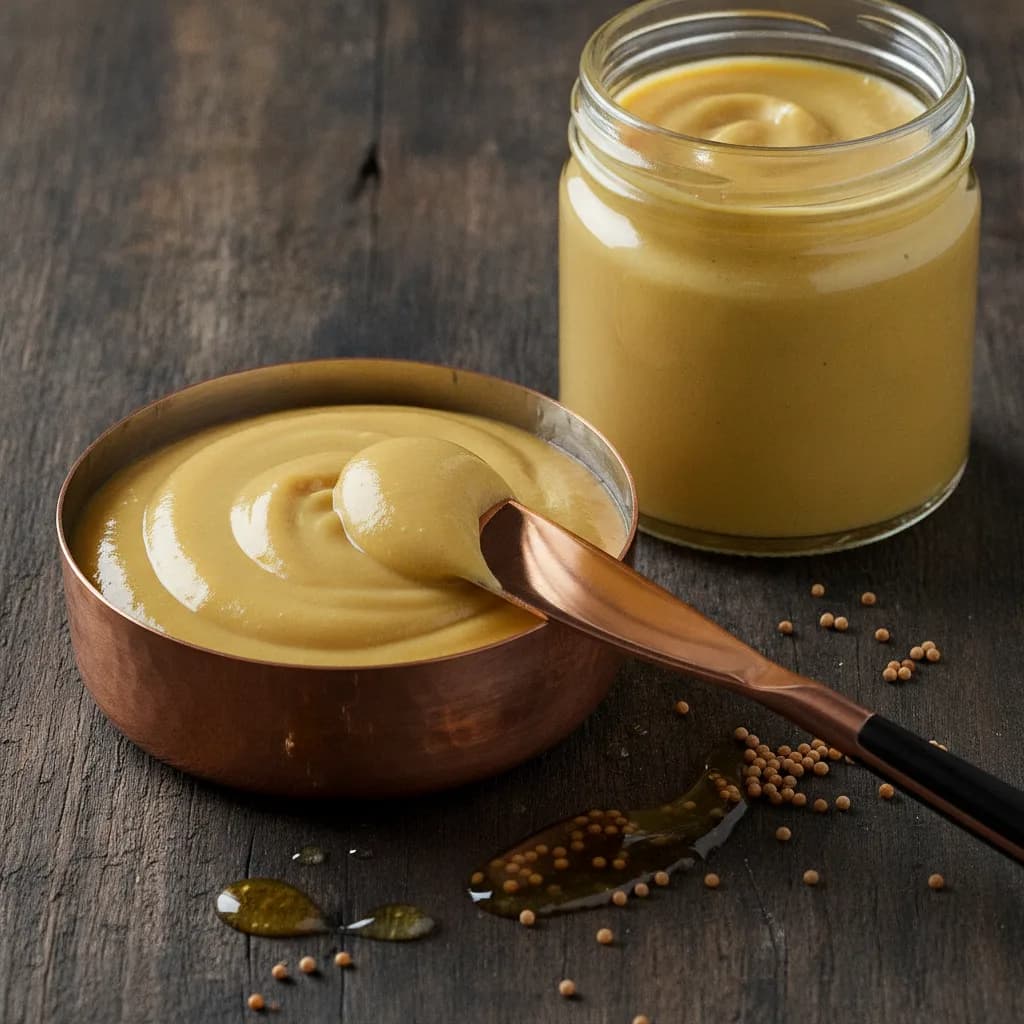
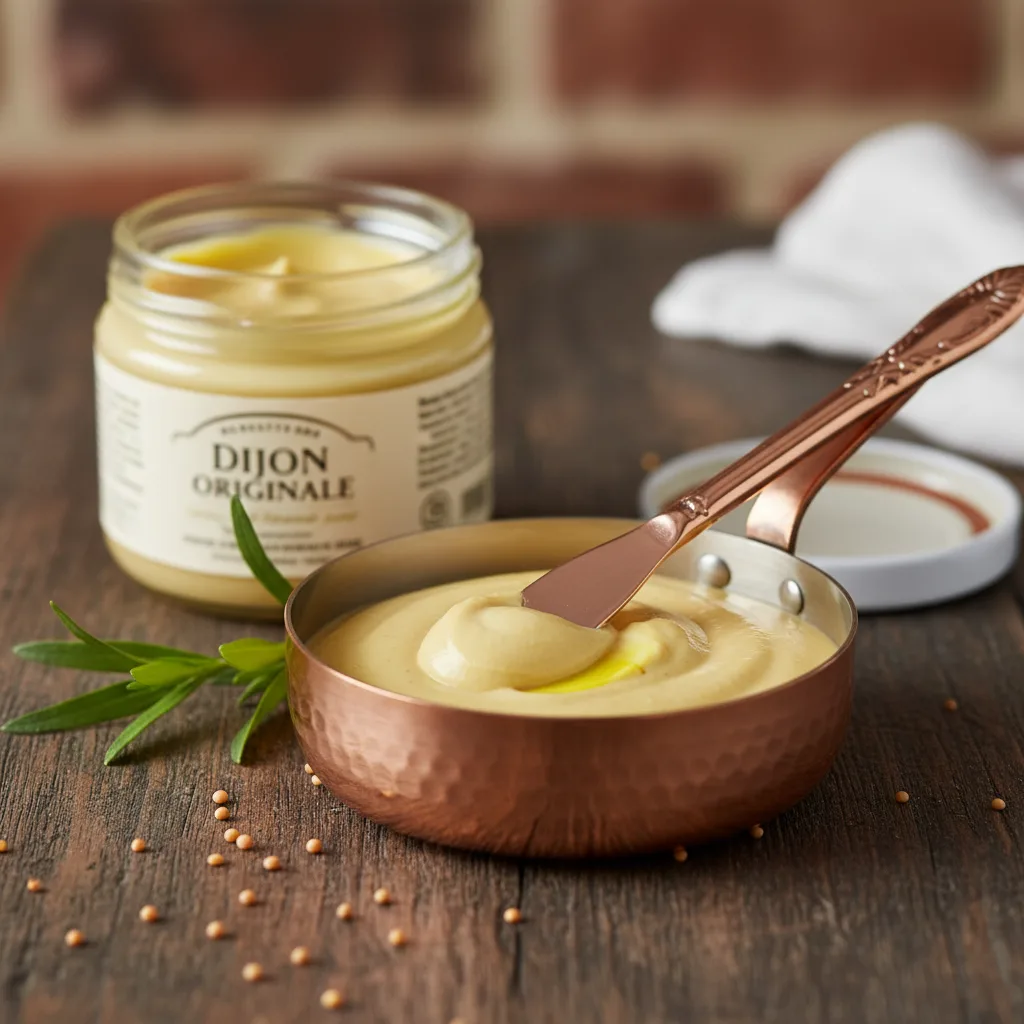
Types of Mustard
Get some
On the shelf at your store. Live pricing is coming soon.
Add to shopping listStorage
Prepared mustard keeps 1-2 years in the fridge after opening; it may lose potency but remains safe. Mustard powder and whole seeds store indefinitely in a cool, dark pantry when kept dry. Yellow mustard is more stable; Dijon may separate over time (stir before using).
Cooking Tips
Add mustard to vinaigrettes as an emulsifier to help oil and vinegar stay blended
Mix dry mustard powder with cold water and let sit 10 minutes to develop full pungency before using
Stir a spoonful into mac and cheese, potato salad, or deviled eggs for depth and tang
Toast whole mustard seeds in oil until they pop to release nutty, aromatic flavor for Indian and pickled dishes
Pairs With
Roasted or grilled meats (pork, beef, chicken, sausages)
Cheese (sharp cheddar, Gruyère, Swiss)
Pickles, sauerkraut, and tangy vegetables
Honey, maple syrup, or brown sugar for sweet-savory glazes
Vinegar, lemon juice, and mayonnaise in dressings and sauces
Common Mistakes
Adding mustard to boiling liquids, which can make it taste bitter—stir in after removing from heat
Using old mustard that has dried out or lost flavor; refresh with a splash of vinegar or wine
Assuming all mustards taste the same—yellow is mild, Dijon is sharp, whole-grain is textured, and Chinese/English mustards are very hot
Aliases
- Brown Mustardalternate
/brown-mustard - Dijon-Style Mustardalternate
/dijon-style-mustard - Dry Mustardalternate
/dry-mustard - Dry Mustard Powderalternate
/dry-mustard-powder - Mustard Powderalternate
/mustard-powder - Mustardsplural
/mustards - Spicy Brown Mustardalternate
/spicy-brown-mustard - Yellow Mustardalternate
/yellow-mustard