
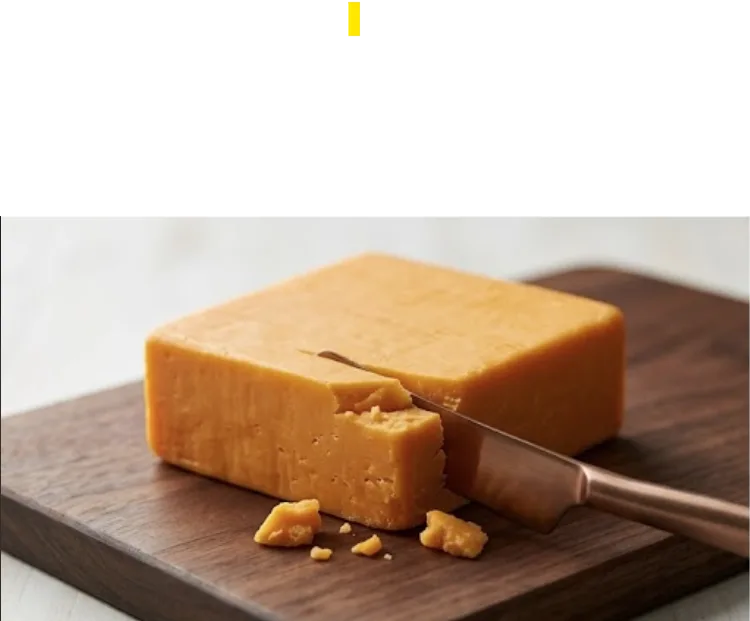
Cheddar Cheese
A versatile aged cheese with sharp, tangy flavor
Types of Cheddar Cheese
Substitutions
Get some
On the shelf at your store. Live pricing is coming soon.
Add to shopping listStorage
Wrap tightly in wax paper or parchment, then plastic wrap or foil to prevent drying. Once opened, store in the coldest part of the fridge. Freezing changes texture (becomes crumbly) but works for melting applications.
Nutrition
High in calcium and phosphorus. Rich in saturated fat and sodium.
Cooking Tips
Bring to room temperature 30 minutes before serving for best flavor and texture
Grate cheese yourself rather than buying pre-shredded for better melting (pre-shredded contains anti-caking agents)
Use block cheddar for slicing and aged/sharp cheddar for maximum flavor in cooked dishes
Add at the end of cooking or on low heat to prevent the cheese from becoming grainy or separating
Pairs With
Apples and pears (classic cheese board pairing)
Pickles, chutney, and mustard (cuts richness)
Crackers, crusty bread, and pretzels
Beer, especially ales and stouts
Grapes, figs, and honey
Common Mistakes
Overheating cheddar, causing it to separate into oil and solids (keep heat low or add off-heat)
Storing unwrapped or in airtight containers without breathable paper, causing excess moisture or drying
Using mild cheddar when sharp is needed, resulting in bland flavor in cooked dishes
Aliases
- Cheddar Cheesesplural
/cheddar-cheeses - Extra-Sharp Cheddar Cheesealternate
/extra-sharp-cheddar-cheese - Sharp Cheddar Cheesealternate
/sharp-cheddar-cheese - Shredded Cheddar Cheesealternate
/shredded-cheddar-cheese - White Cheddar Cheesealternate
/white-cheddar-cheese