
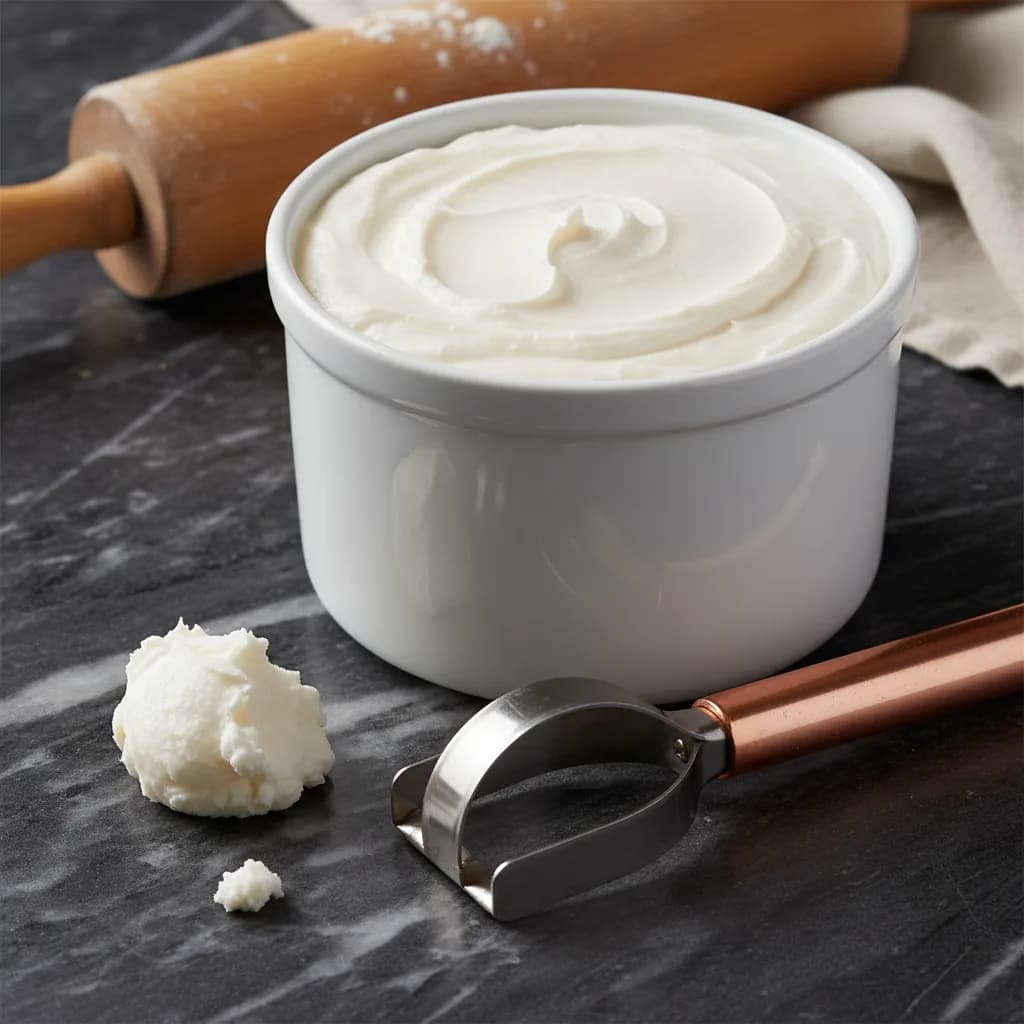
Types of Shortening
Get some
On the shelf at your store. Live pricing is coming soon.
Add to shopping listStorage
Store in a cool, dark pantry at room temperature. Keeps for 2+ years unopened, about 1 year after opening. No refrigeration needed. Discard if it develops an off smell or changes color.
Nutrition
Pure fat with no vitamins, minerals, or protein. Contains saturated and trans fats depending on brand and hydrogenation process.
Cooking Tips
Measure shortening by packing it firmly into a measuring cup, then level off with a knife for accuracy
For flaky pie crusts, keep shortening cold and work quickly to prevent it from melting into the dough
Shortening can be creamed with sugar just like butter—beat for 3-5 minutes until light and fluffy
Use shortening for high-heat frying (smoke point around 360°F/182°C) without burning
For best texture in cookies, use half butter (for flavor) and half shortening (for tenderness)
Common Mistakes
Using shortening alone in recipes that need butter's flavor—shortening is nearly flavorless and won't taste the same
Not adjusting liquid when substituting for butter—butter is 15-20% water, shortening is 100% fat, so reduce other liquids slightly
Expecting the same spread in cookies—shortening doesn't spread as much as butter, resulting in thicker, puffier cookies
Overworking pastry dough with shortening—it melts at a higher temperature than butter, but still needs to stay in distinct pieces for flakiness
Aliases
- All-Vegetable Shorteningalternate
/all-vegetable-shortening - Butter Shorteningalternate
/butter-shortening - Shorteningsplural
/shortenings - Solid Vegetable Shorteningalternate
/solid-vegetable-shortening - Vegetable Shorteningalternate
/vegetable-shortening