
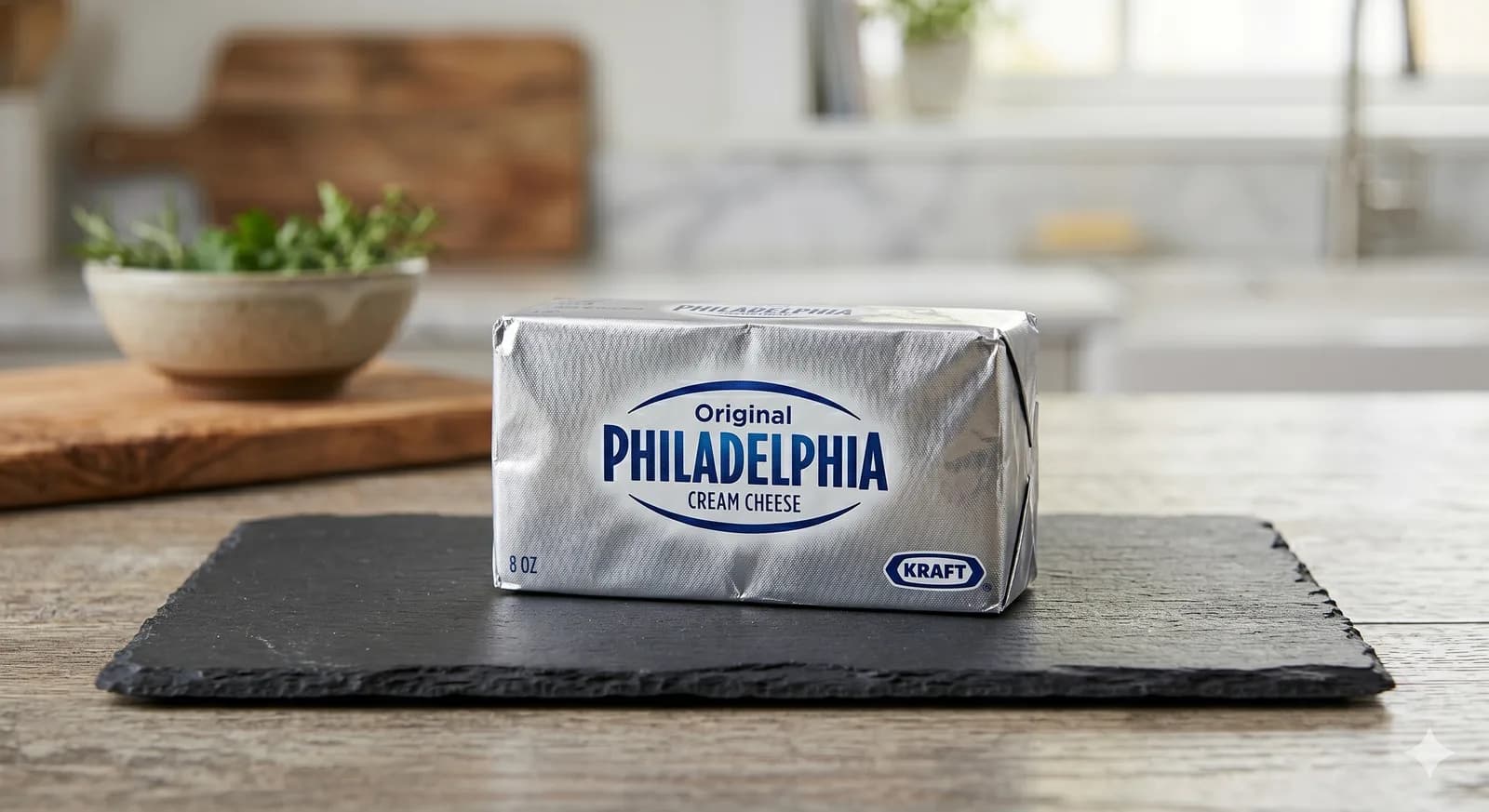
Types of Cream Cheese
Substitutions
Get some
On the shelf at your store. Live pricing is coming soon.
Add to shopping listStorage
Keep refrigerated at all times. Once opened, use within 10 days for best quality. Freezing changes texture, making it crumbly; best thawed for cooking rather than spreading.
Nutrition
High in saturated fat and cholesterol. Low-fat and non-fat versions available with reduced calories.
Cooking Tips
Bring to room temperature 30 minutes before using for easier spreading and mixing
Beat softened cream cheese before adding to batters to prevent lumps
Add a splash of milk or cream while mixing to restore smooth texture if it becomes grainy
Use the brick (block) style for baking; tub-style often contains stabilizers that affect texture in recipes
Pairs With
Bagels and lox
Fresh berries and preserves
Smoked salmon and capers
Hot sauce and jalapeños for dips
Garlic and herbs for savory spreads
Graham cracker crusts in cheesecakes
Common Mistakes
Using cold cream cheese in batters causes lumps that won't smooth out
Overbeating can make it too thin and loose; mix just until smooth
Using whipped or flavored varieties in recipes calling for regular cream cheese alters results
Leaving unrefrigerated for over 2 hours risks bacterial growth
Aliases
- Brick Cream Cheesemerged
/brick-cream-cheese - Cream Cheese Spreadalternate
/cream-cheese-spread - Cream Cheesesplural
/cream-cheeses - Light Cream Cheese Spreadalternate
/light-cream-cheese-spread - Neufchatel Cheesealternate
/neufchatel-cheese - Whipped Cream Cheesealternate
/whipped-cream-cheese