
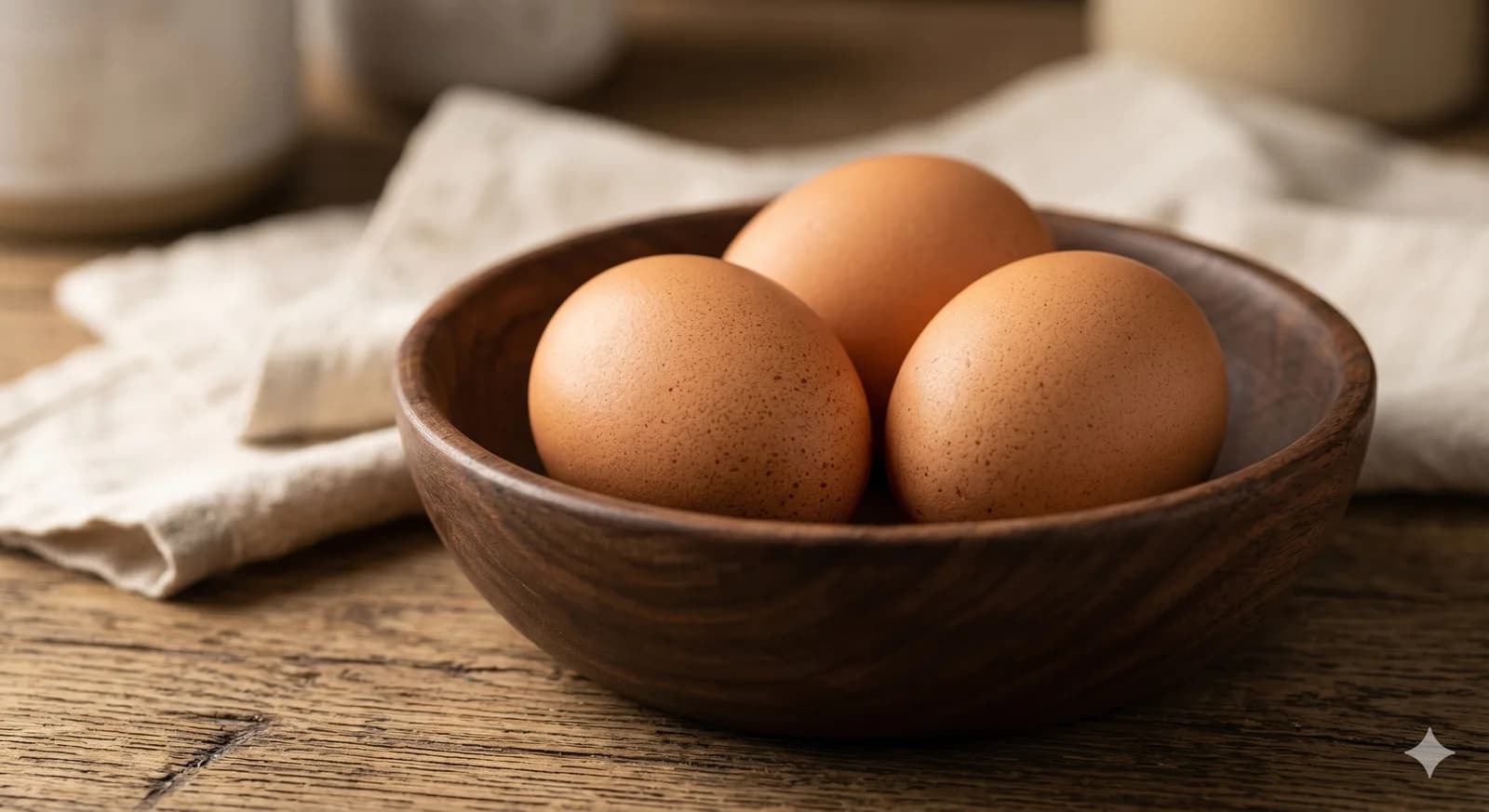
Eggs
A fundamental protein and baking ingredient
Types of Eggs
Get some
On the shelf at your store. Live pricing is coming soon.
Add to shopping listStorage
Store in original carton in the fridge, not the door. Check freshness by placing in water—fresh eggs sink, old eggs float. Raw eggs can be frozen (beaten, not in shell) for up to 12 months.
Nutrition
One large egg (50g) contains about 6-7g protein. Yolks contain cholesterol, vitamins A, D, E, and B12.
Cooking Tips
Room temperature eggs blend better into batters and whip to greater volume than cold eggs
Add a pinch of salt or acid (vinegar, lemon juice) when poaching to help whites set
For easier peeling of hard-boiled eggs, use older eggs (1-2 weeks old) and shock in ice water after cooking
Separate eggs when cold, but let whites come to room temperature before whipping for meringues or soufflés
A fresh egg has a firm, dome-shaped yolk and thick white that doesn't spread much when cracked
Pairs With
Cheese, butter, cream
Bacon, ham, sausage
Spinach, mushrooms, tomatoes
Herbs: chives, parsley, tarragon, dill
Toast, potatoes, rice
Common Mistakes
Overcooking scrambled eggs—remove from heat while still slightly wet as they continue cooking
Boiling eggs at a rolling boil, which causes rubbery whites and green-gray yolks; use a gentle simmer instead
Adding cold eggs directly to hot pans, causing uneven cooking; let them warm up first
Not using enough fat when frying, leading to stuck eggs and torn whites
Aliases
- Eggalternate
/egg