
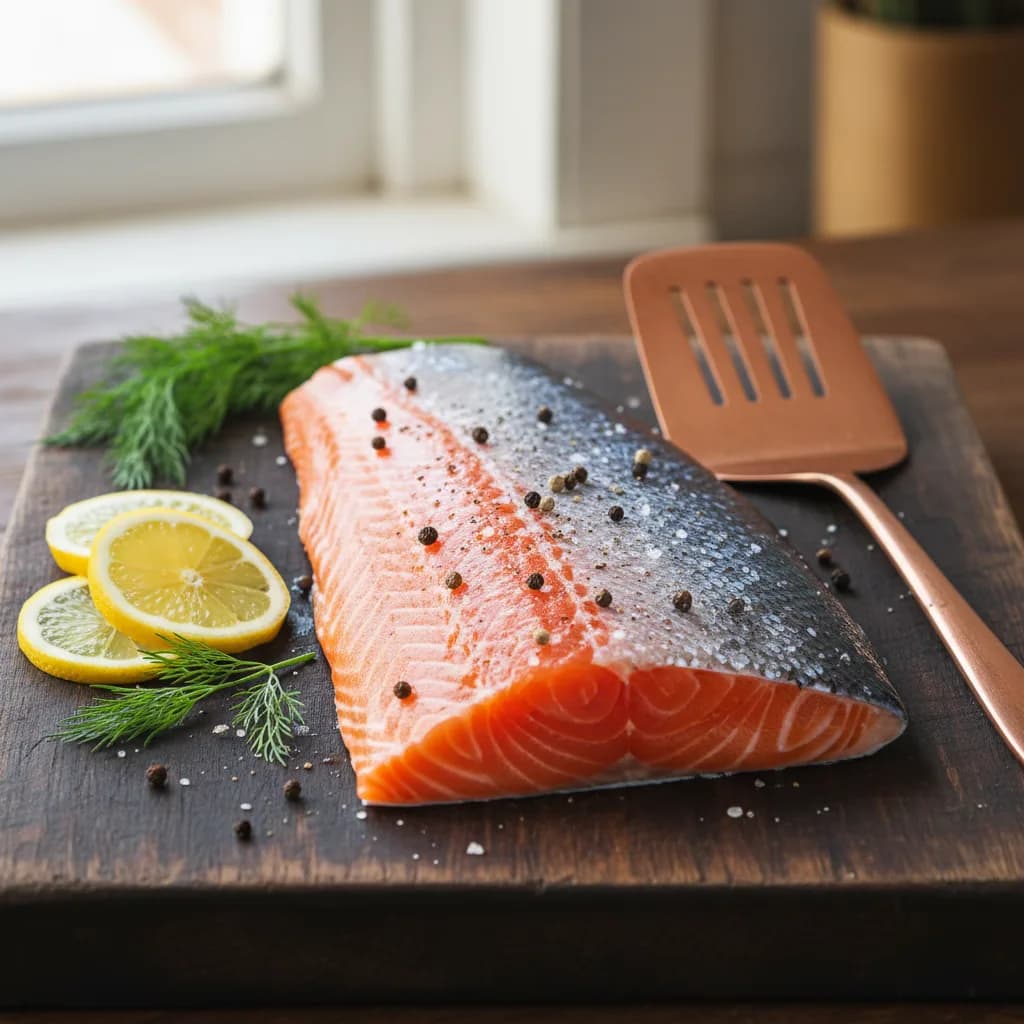
Salmon
A nutrient-dense fatty fish with mild, buttery flavor
Types of Salmon
Get some
On the shelf at your store. Live pricing is coming soon.
Add to shopping listStorage
Fresh salmon should be stored on ice or in the coldest part of the fridge immediately after purchase. Wrap tightly to prevent odor transfer. Frozen salmon keeps well for up to 3 months; thaw in the fridge overnight before cooking.
Nutrition
Values are for cooked wild salmon. Farmed salmon may vary slightly. Rich in omega-3 fatty acids (EPA and DHA) and vitamin D.
Cooking Tips
Pat salmon dry before cooking for better browning and crisper skin.
Cook salmon skin-side down first in a cold pan, then increase heat to gently render the skin without sticking.
Salmon is done when it flakes easily with a fork and reaches an internal temperature of 63°C (145°F).
Don't overcook—salmon dries out quickly. Remove from heat when still slightly translucent in the center.
Farmed and wild salmon have different flavors; wild is leaner and more pronounced, while farmed is milder and buttery.
Pairs With
Lemon, dill, capers, and mustard (classic Scandinavian pairings)
Soy sauce, ginger, sesame oil (Asian preparations)
Olive oil, tomato, and basil (Mediterranean style)
Maple syrup, soy sauce, and bourbon (North American glazes)
Common Mistakes
Cooking at too high a heat, which dries out the flesh and can char the exterior.
Cooking skin-side up first, which makes the skin stick and won't crisp properly.
Overcooking—salmon continues to cook slightly after you remove it from heat.
Aliases
- Salmon Filetalternate
/salmon-filet - Salmon Filetsalternate
/salmon-filets - Salmon Filletalternate
/salmon-fillet - Salmon Filletsalternate
/salmon-fillets - Salmon Steakalternate
/salmon-steak - Salmon Steaksalternate
/salmon-steaks - Smoked Salmonalternate
/smoked-salmon