
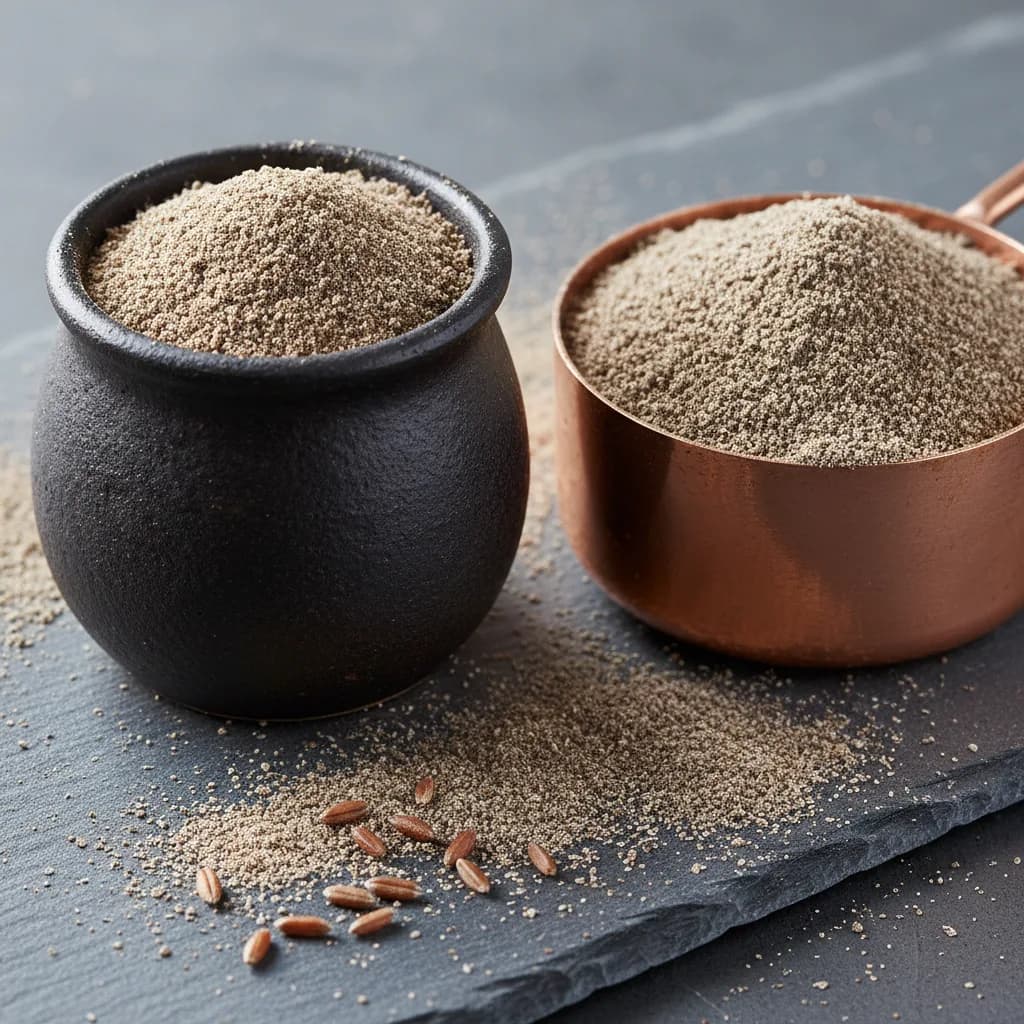
Rye Flour
A nutrient-rich flour for hearty breads and baked goods
Types of Rye Flour
Get some
On the shelf at your store. Live pricing is coming soon.
Add to shopping listStorage
Store in an airtight container away from heat and light. Rye flour can become rancid more quickly than wheat flour due to its higher fat content, so cool storage is recommended.
Cooking Tips
Mix rye flour with wheat flour (typically 25–50% rye) for easier handling and better rise—pure rye doughs are sticky and dense.
Use slightly more liquid when baking with rye; it absorbs water differently than wheat flour.
Rye breads benefit from longer fermentation and rest times to develop flavor.
Sift rye flour before measuring for more accurate results, as it compacts easily.
Common Mistakes
Using 100% rye flour without adjusting hydration or expectations—the result will be dense and gummy, not airy.
Not accounting for rye's weaker gluten network; over-mixing can make dough tough instead of improving structure.
Storing rye flour in warm or humid conditions, which accelerates rancidity.
Aliases
- Rye Floursplural
/rye-flours