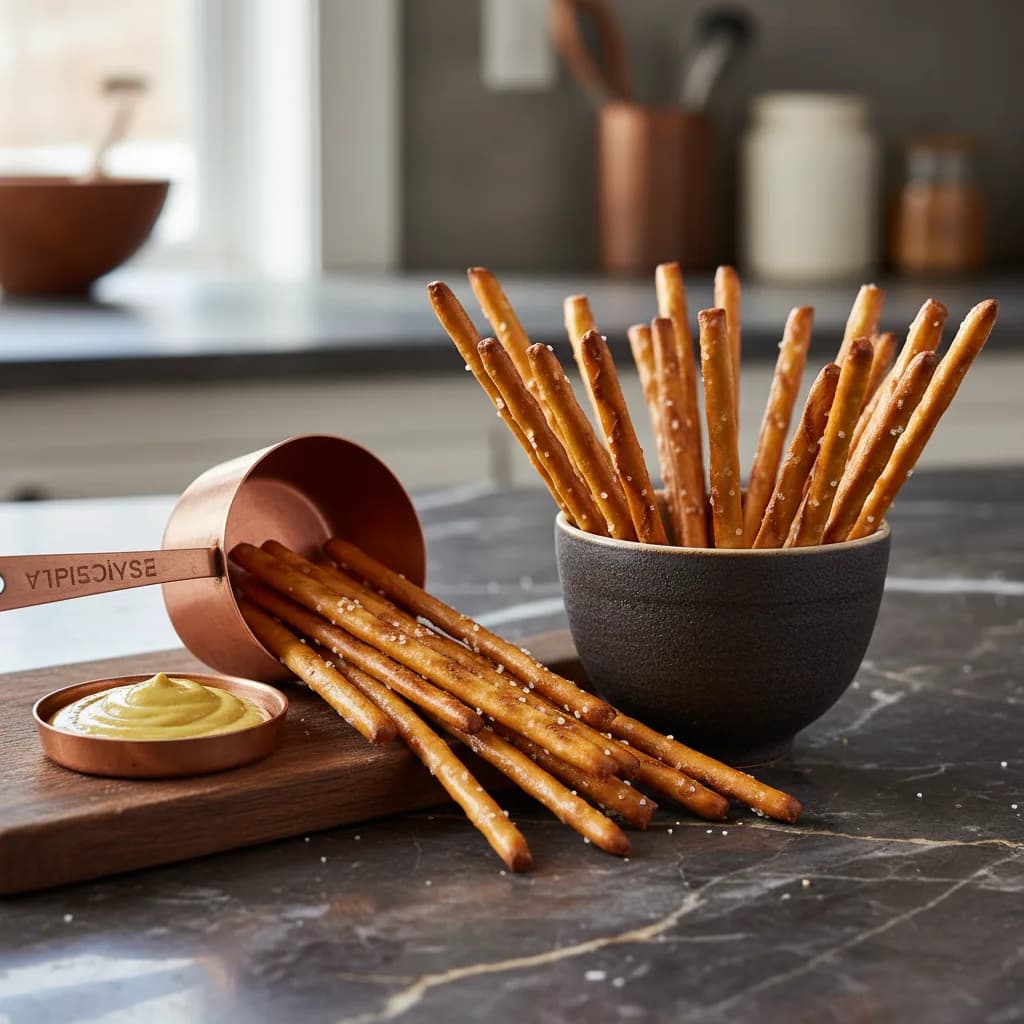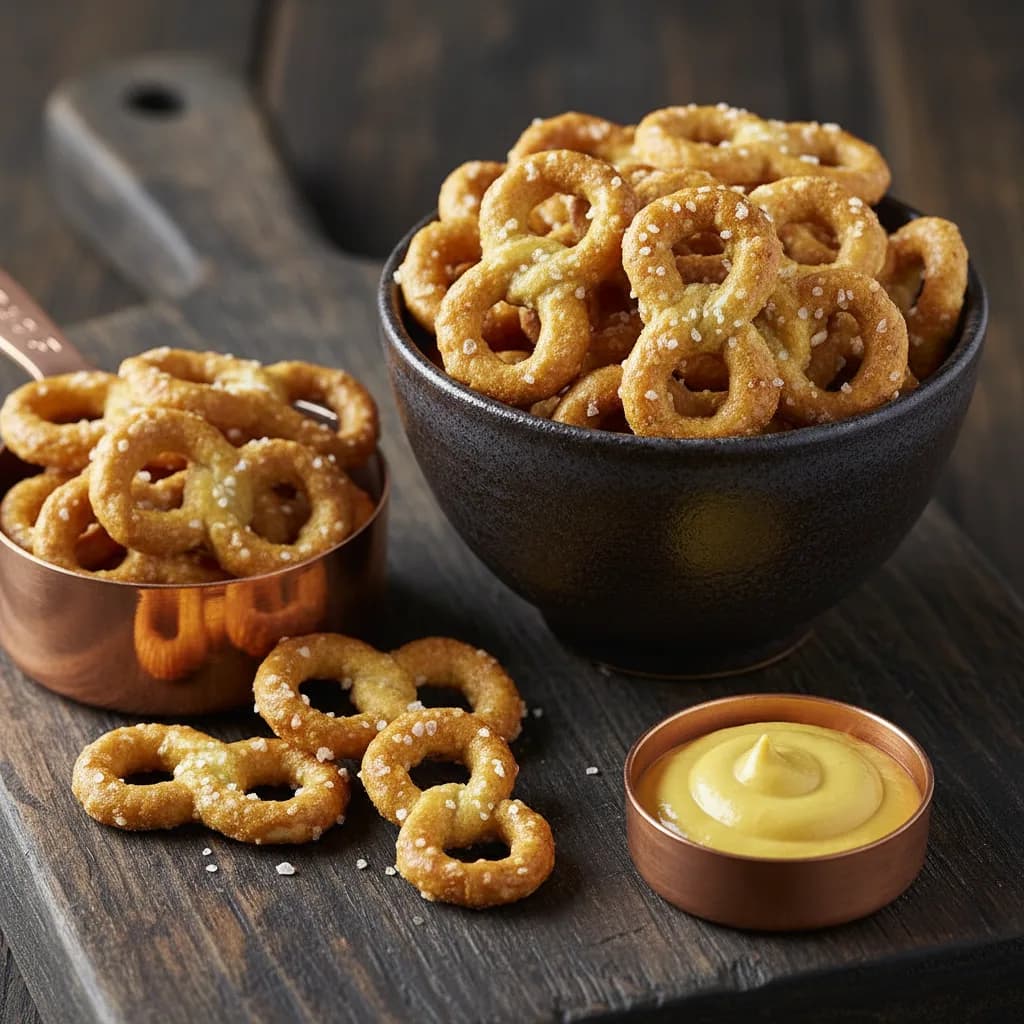
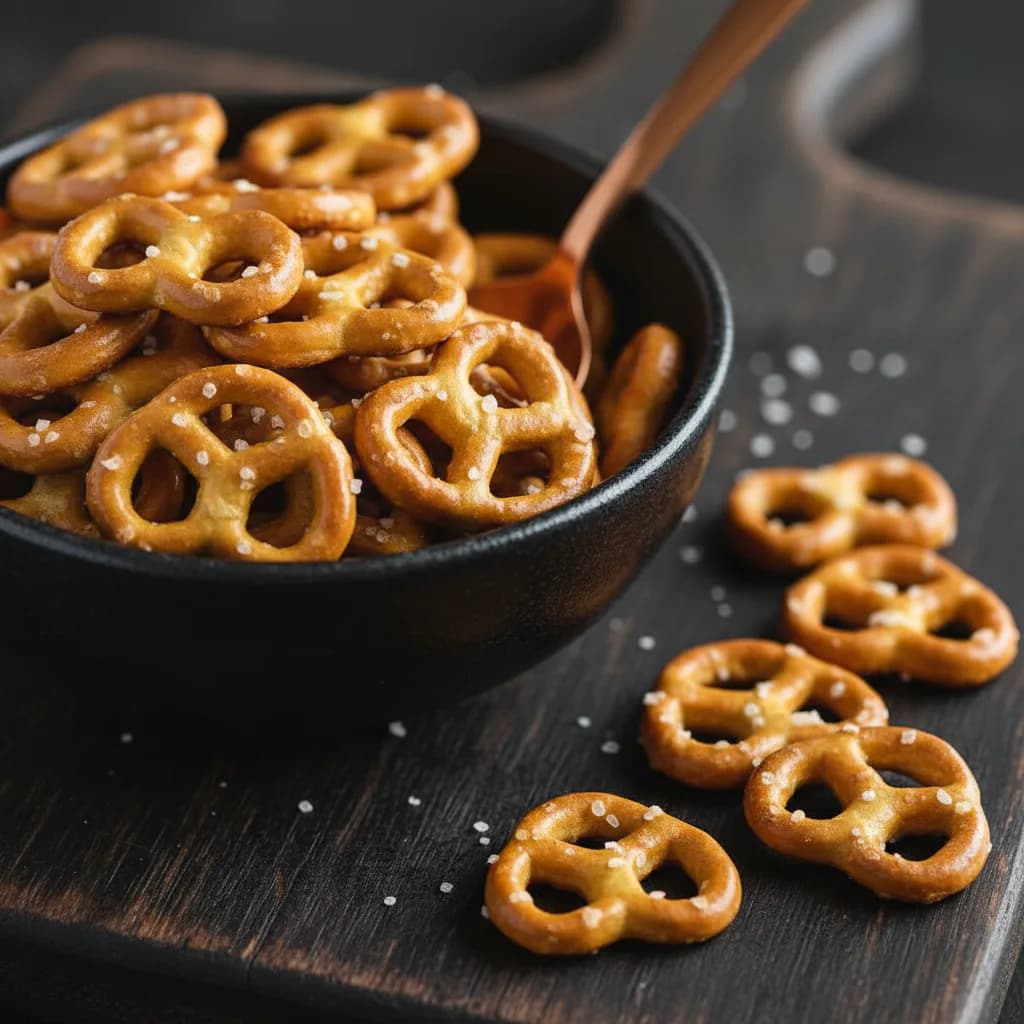
OriginGermany and broader Central European tradition; the twisted knot shape has medieval roots
VarietiesHard/crispy (shelf-stable), soft (chewy, usually fresh-baked), and pretzel crisps (thin, extra-crunchy)
Drill down
Types of Pretzels
Buy it or make it
Get some
Buy it
Common carton size
On the shelf at your store. Live pricing is coming soon.
Add to shopping listStorage
Freeze in airtight bags or containers. Thaw at room temperature before serving.
Keep in an airtight container to maintain crispness. Exposure to air will soften them over time.
Cooking Tips
Soften stale pretzels by wrapping in a damp paper towel and microwaving for 10–15 seconds.
Crush pretzels for use as a crust for chicken or fish—their salt and crunch add great texture.
Toast pretzels in a 300°F oven for 5 minutes to crisp them up before serving.
Common Mistakes
Storing pretzels in paper bags instead of airtight containers—they'll go stale quickly.
Using stale pretzels in recipes where crunch matters; freshness is key for texture.
Confusing pretzel varieties (soft vs. hard/crispy)—verify which your recipe calls for.
Also called