
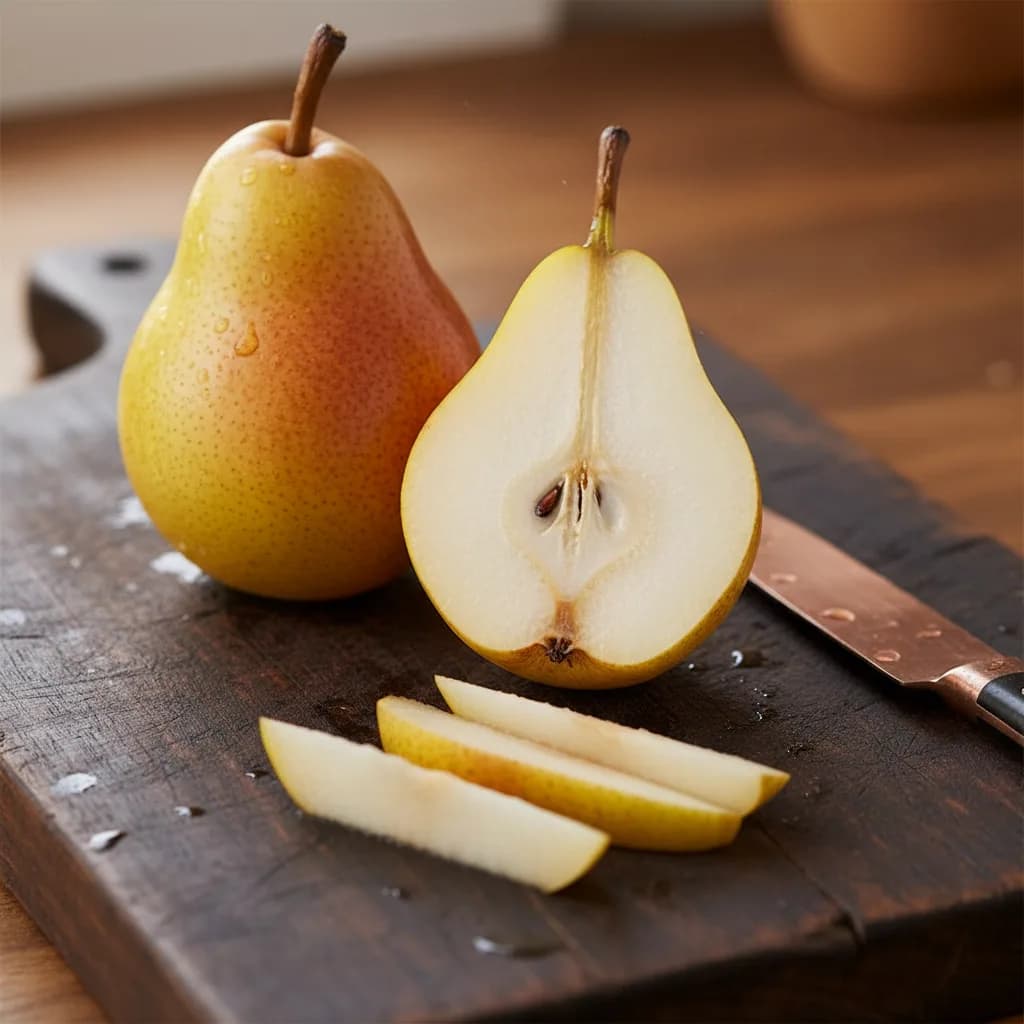
Types of Pears
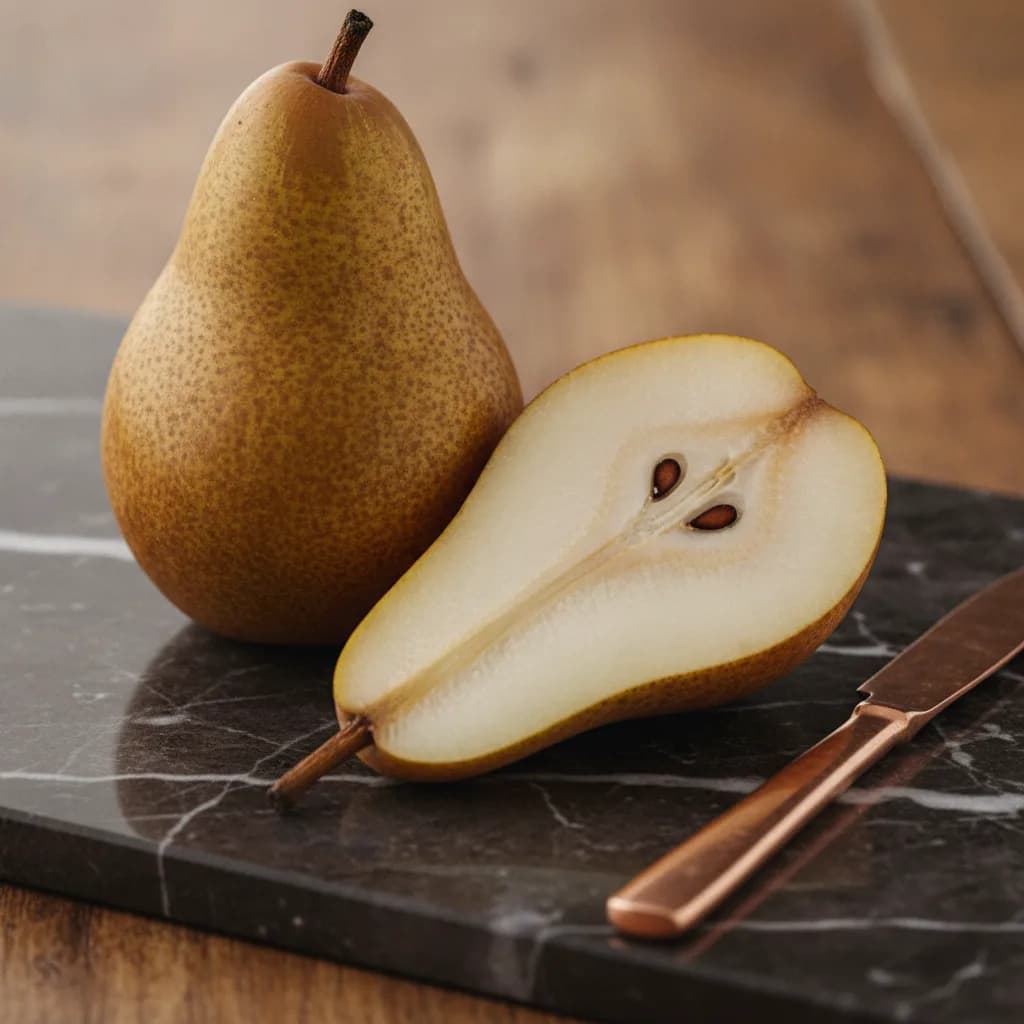
Get some
On the shelf at your store. Live pricing is coming soon.
Add to shopping listStorage
Pears ripen from the inside out. Buy firm pears and leave at room temperature until they yield slightly to gentle pressure at the neck. Once ripe, move to the fridge to slow further softening. Avoid stacking to prevent bruising.
5–10 (once ripe)
3–5 (until ripe)
Cooking Tips
To speed ripening, place in a paper bag with a banana or apple (they release ethylene gas).
Check ripeness at the neck, not the bottom—pears ripen from the inside out.
Use underripe pears for poaching or baking; they hold their shape better.
Ripe pears are best eaten fresh or used in raw preparations like salads.
Pears brown quickly once cut; toss with lemon juice to prevent oxidation.
Pairs With
Chocolate, vanilla, cinnamon, ginger, cardamom
Cheese (especially blue, goat, Stilton)
Walnuts, almonds, hazelnuts
Honey, caramel
Rosemary, thyme
Common Mistakes
Waiting too long to use ripe pears—they deteriorate quickly once fully soft.
Trying to ripen pears in the fridge (they ripen better at room temperature).
Discarding slightly bruised fruit; brown spots on the skin don't affect the usable flesh inside.
Using overripe pears for baking when the texture falls apart.
Aliases
- Pearalternate
/pear