
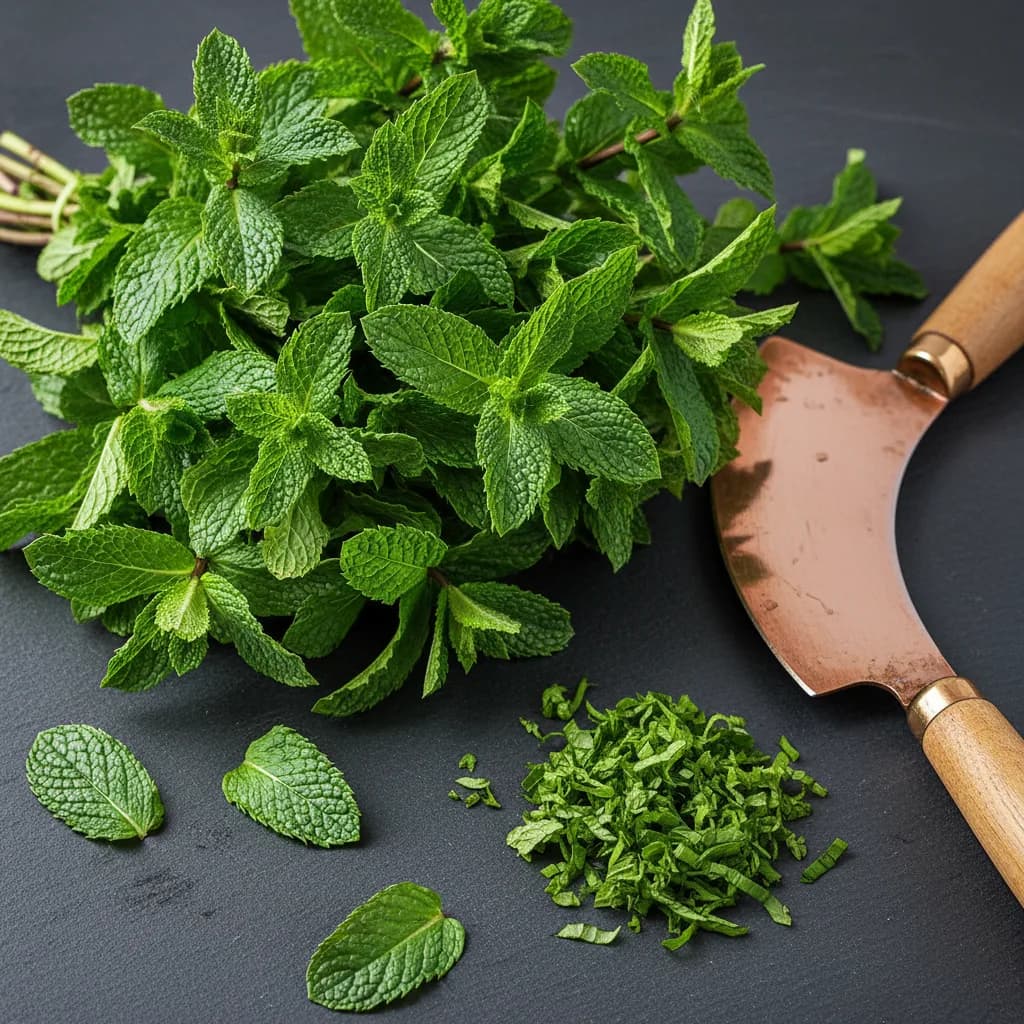
Types of Mint
Get some
On the shelf at your store. Live pricing is coming soon.
Add to shopping listStorage
Fresh mint: wrap in damp paper towels and store in a plastic bag in the crisper. Dried mint: keep in an airtight container away from heat and light. Frozen mint works well in drinks and cooked dishes but loses crispness for garnish.
Cooking Tips
Tear or chiffonade fresh mint just before using to preserve flavor and color.
Add fresh mint at the end of cooking or to cold dishes—heat diminishes its brightness.
Dried mint is 3–4 times more concentrated than fresh; use about 1 teaspoon dried per tablespoon fresh.
Mint pairs beautifully with chocolate, citrus, cucumbers, and yogurt.
Bruise mint leaves gently in your hand before muddling for drinks—aggressive crushing can make them bitter.
Pairs With
Chocolate (especially dark)
Citrus (lemon, lime, orange)
Cucumber
Yogurt and cream
Stone fruits (peaches, plums)
Beverages (tea, cocktails, lemonades)
Middle Eastern and Southeast Asian cuisines
Common Mistakes
Overcooking or adding mint too early—it loses its fresh flavor quickly under heat.
Using too much—mint can overpower delicate dishes. Start with less than you think you need.
Confusing dried and fresh ratios and ending up with overwhelming flavor or bitterness.
Aliases
- Dried Mintalternate
/dried-mint - Fresh Mintalternate
/fresh-mint - Mint Leafalternate
/mint-leaf - Mint Leavesalternate
/mint-leaves - Mintsplural
/mints - Spearmintalternate
/spearmint