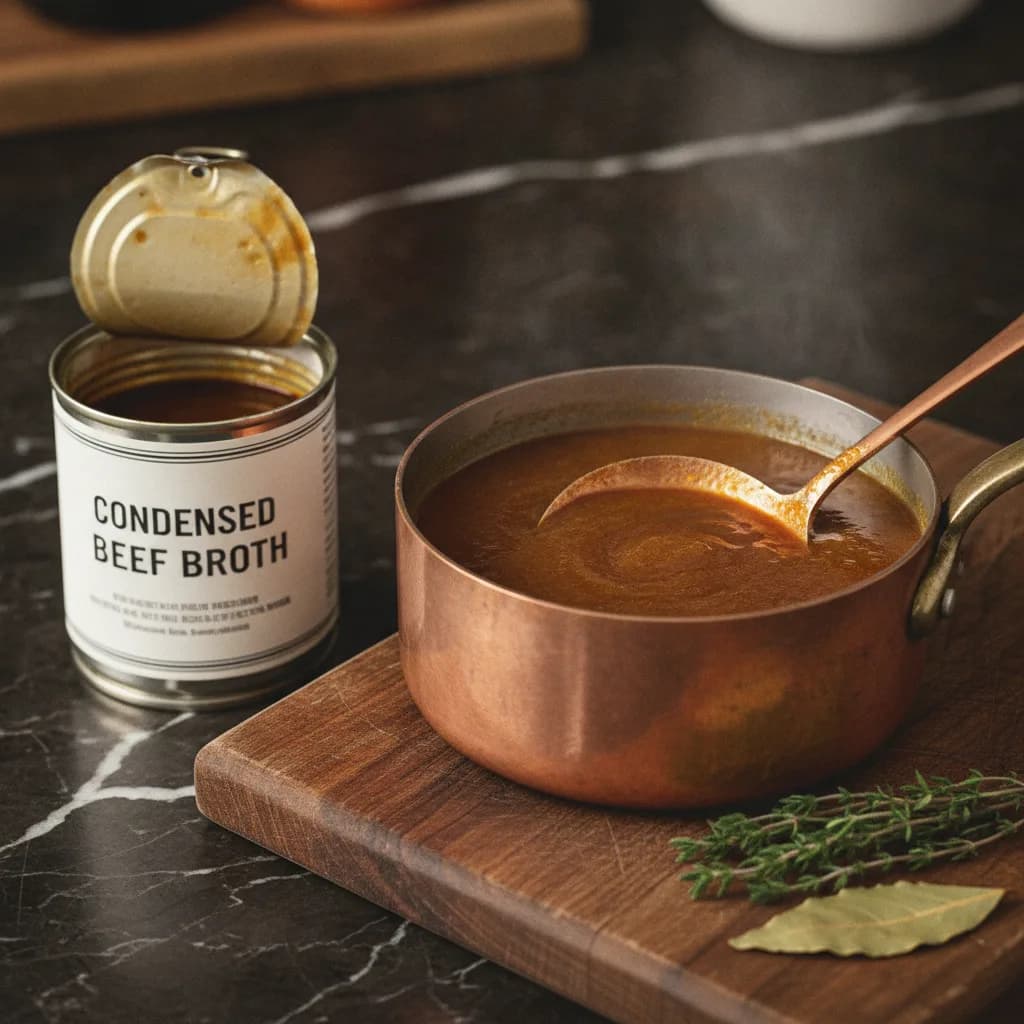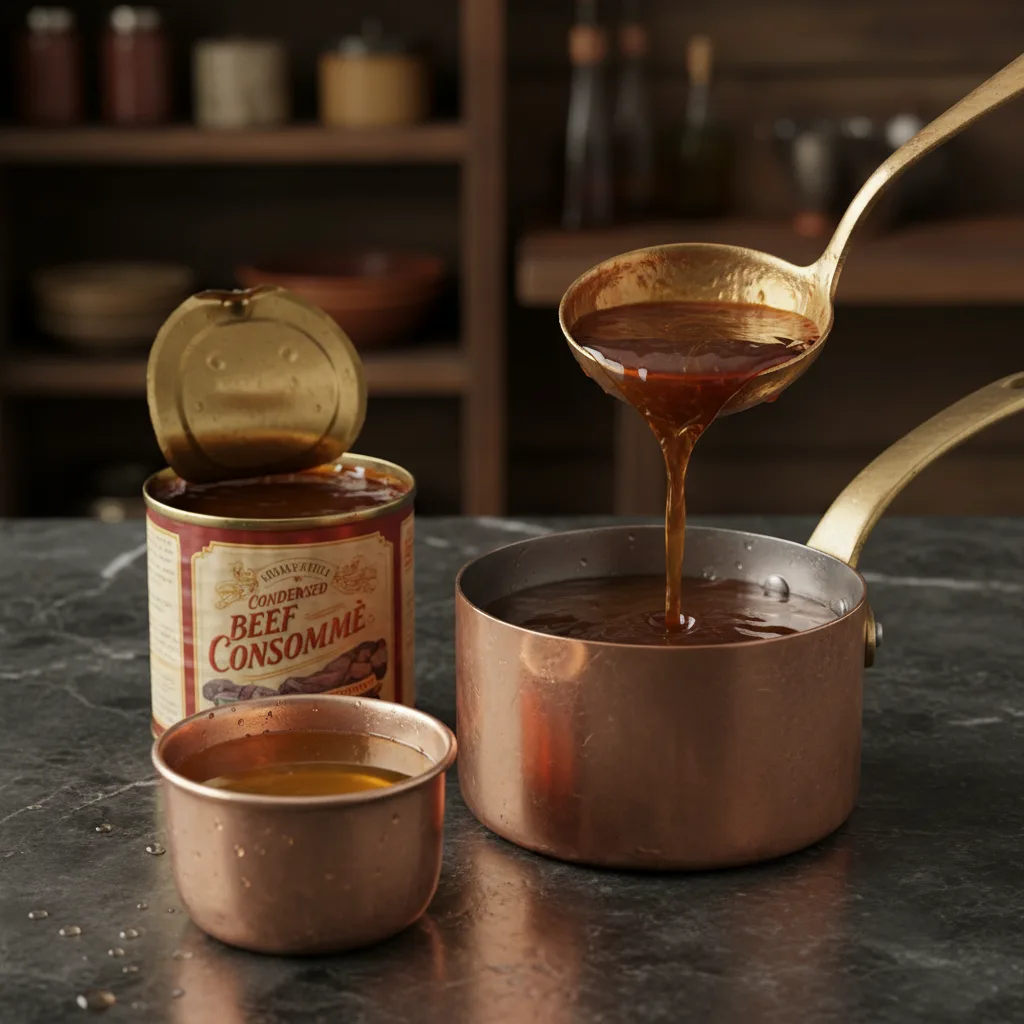
Types of Beef Broth
Get some
On the shelf at your store. Live pricing is coming soon.
Add to shopping listStorage
Unopened boxed or canned broth: store in pantry until opened. Once opened, refrigerate. Freeze in ice cube trays or small containers for convenient portioning.
Nutrition
Values vary by brand and concentration. Homemade broth typically lower in sodium.
Cooking Tips
Use low-sodium broth when possible to control salt levels in your final dish
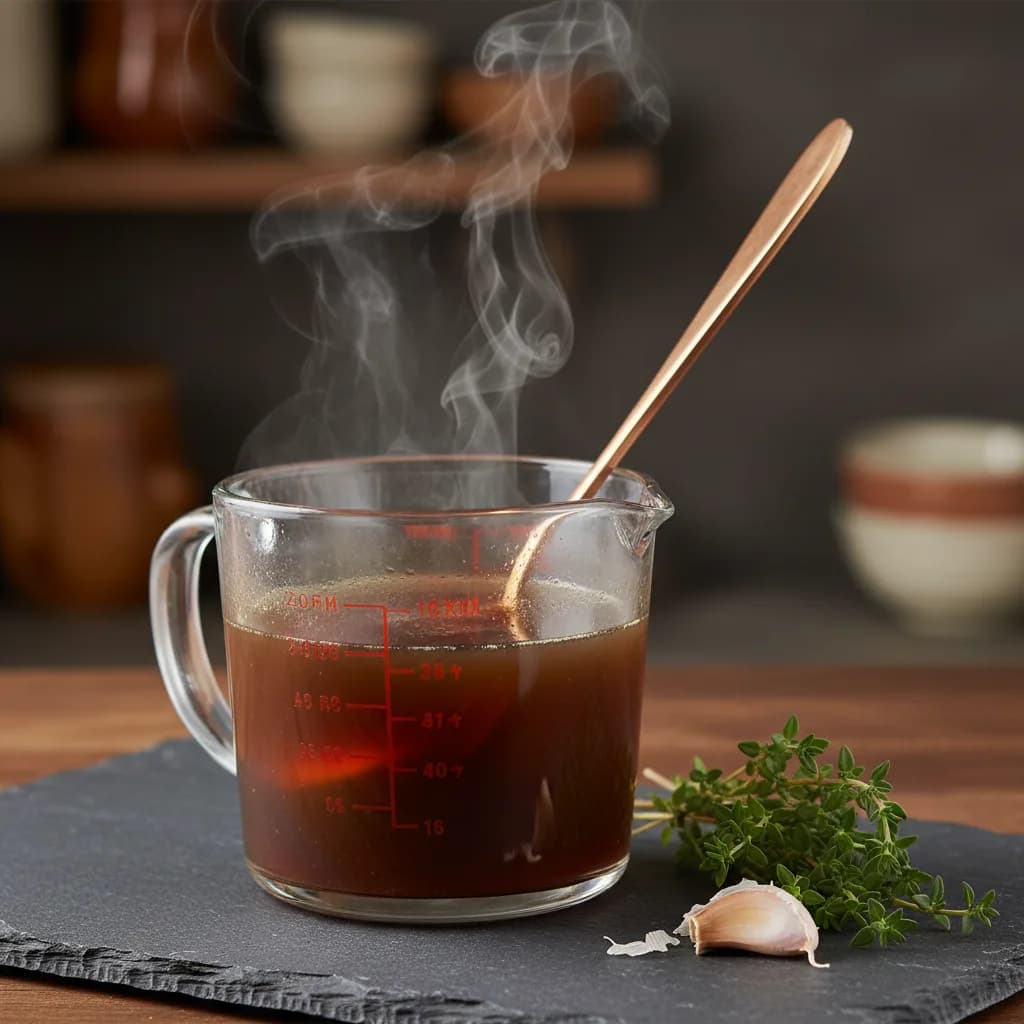
Enhance store-bought broth by simmering with fresh herbs, garlic, or a splash of soy sauce
Warm broth before adding to recipes for more even cooking temperatures
Skim any fat from the surface if you prefer a leaner broth
Pairs With
Onions, carrots, and celery for classic soups
Mushrooms for enhanced umami depth
Red wine for deglazing and rich sauces
Root vegetables like parsnips and turnips
Barley, rice, or pasta for hearty soups
Fresh or dried herbs like thyme, rosemary, and bay leaf
Common Mistakes
Adding too much broth at once—add gradually to control consistency
Boiling broth rapidly, which can make it cloudy and affect texture
Forgetting to taste and adjust seasoning, especially with low-sodium versions
Using high-sodium broth without reducing other salt in the recipe
Aliases
- Beef Bouillonalternate
/beef-bouillon - Beef Bouillon Cubealternate
/beef-bouillon-cube - Beef Bouillon Cubesalternate
/beef-bouillon-cubes - Beef Bouillon Granulesalternate
/beef-bouillon-granules - Beef Brothsplural
/beef-broths - Beef Consommealternate
/beef-consomme - Beef Stockalternate
/beef-stock - Canned Beef Brothalternate
/canned-beef-broth