
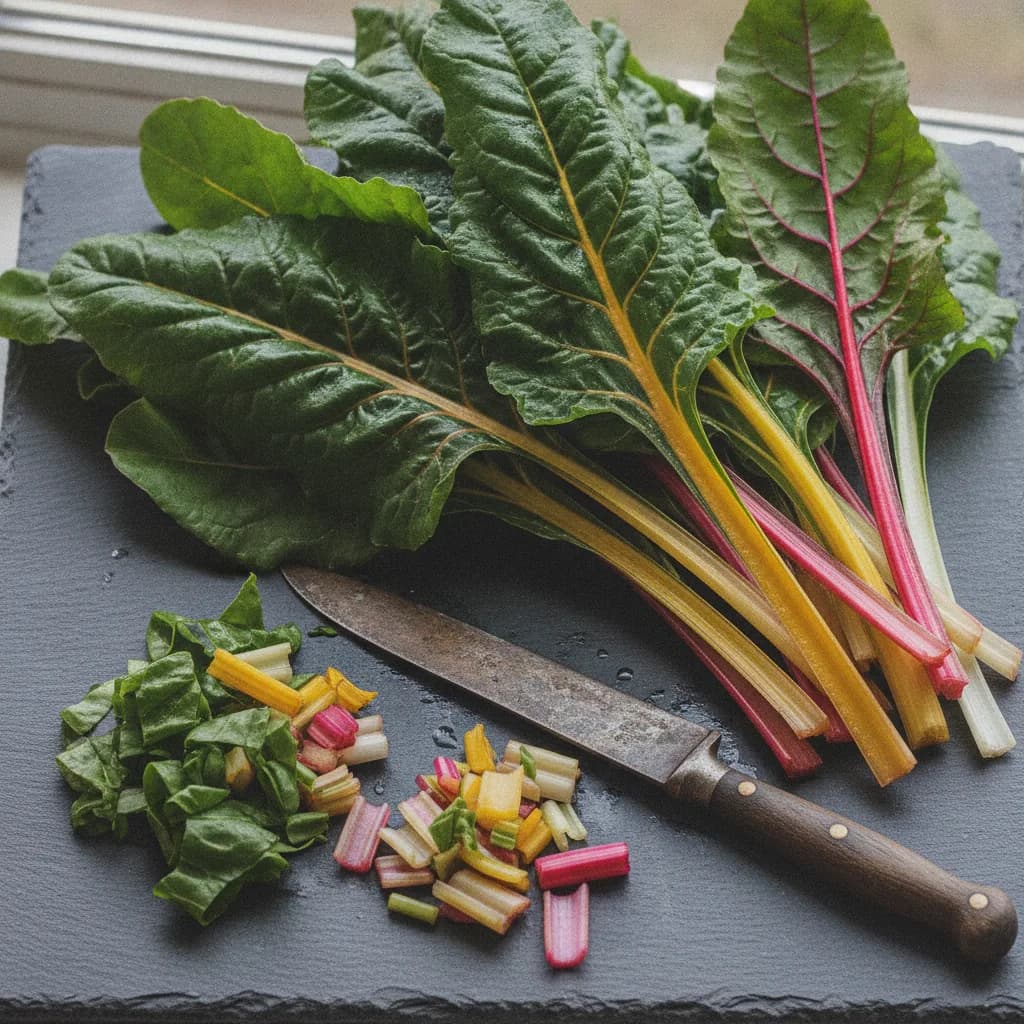
Swiss Chard
A nutrient-dense leafy green with edible stems
Get some
On the shelf at your store. Live pricing is coming soon.
Add to shopping listStorage
Wrap unwashed leaves in a damp paper towel and store in a plastic bag in the crisper drawer. Do not wash until ready to use.
Blanch stems and leaves for 2–3 minutes, shock in ice water, drain well, then freeze in an airtight container or freezer bag.
Cooking Tips
Separate the leaves from the stems before cooking—stems take longer to soften and benefit from a head start in the pan.
Young, tender leaves can be eaten raw in salads; mature leaves are best cooked.
The colorful varieties (red, yellow, orange) are just as nutritious as green and add visual interest to dishes.
Swiss chard wilts dramatically when cooked—a large bunch becomes a modest side dish.
Rinse thoroughly in cold water and inspect for grit between the ribs.
Pairs With
Garlic, onion, and shallots (aromatics)
Olive oil and butter (fats)
Lemon juice and vinegar (acid)
Pine nuts, walnuts, and sesame seeds (texture)
Feta, ricotta, and Parmesan (cheese)
Chili flakes and black pepper (heat and seasoning)
Common Mistakes
Discarding the stems—they're delicious and nutritious when cooked.
Cooking stems and leaves together for the same duration; stems need more time.
Not rinsing well enough, leaving sand or grit in the final dish.
Overcrowding the pan when wilting, which traps steam and makes the chard mushy.
Aliases
- Swiss Chardsplural
/swiss-chards