
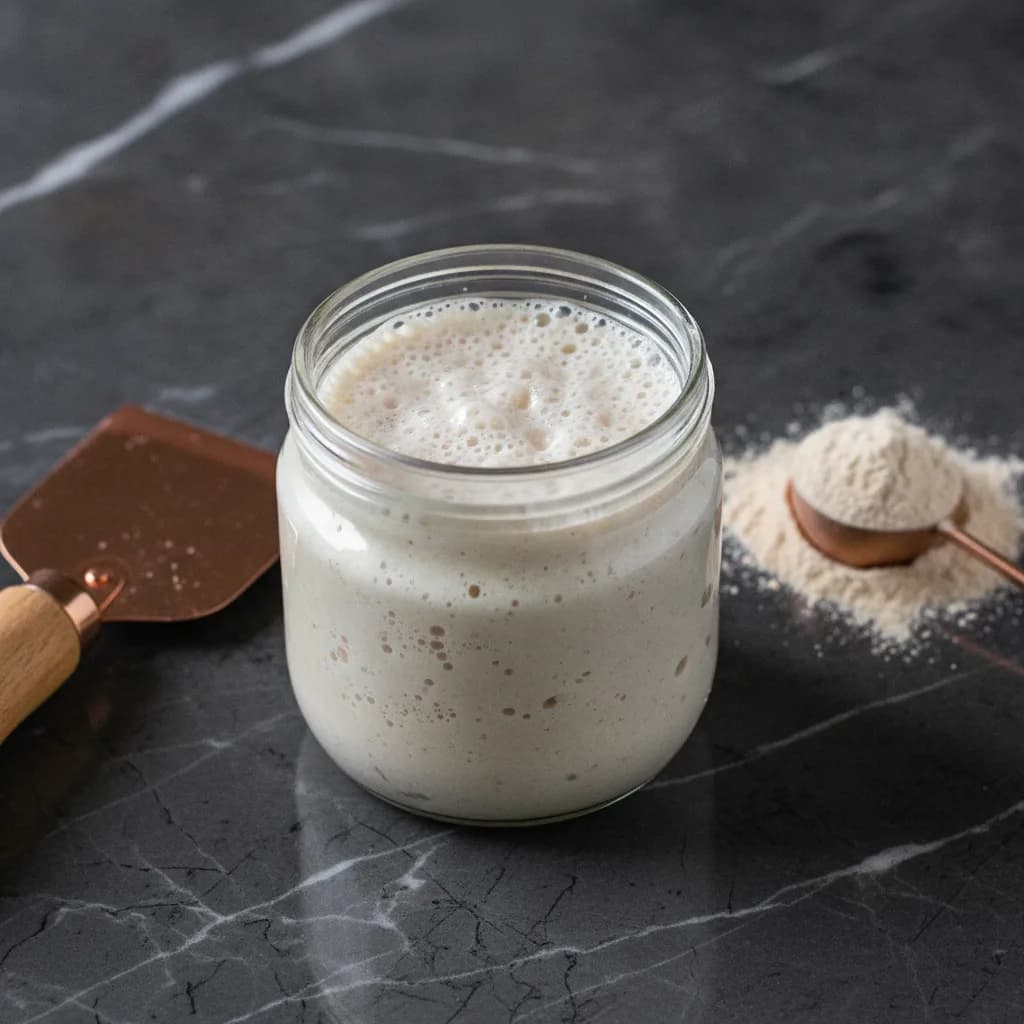
Sourdough Starter
A living ferment for naturally leavened bread
Types of Sourdough Starter
Get some
On the shelf at your store. Live pricing is coming soon.
Add to shopping listStorage
At room temperature, feed daily or every other day depending on warmth. In the fridge, feed weekly to maintain. Frozen starter can be thawed and revived after months. A dormant, dried starter can last years.
Cooking Tips
Feed your starter with equal parts flour and water by weight (e.g., 50g starter + 50g flour + 50g water).
Use filtered or dechlorinated water if possible; chlorine can inhibit fermentation.
Warmer environments (70–80°F) speed up activity; cooler ones slow it down.
A mature starter should double in volume within 4–8 hours of feeding at room temperature.
Discard half before each feeding to manage volume and refresh the culture.
Pairs With
Bread baking (sourdough boules, batards, ciabatta).
Pancakes and waffles for tangy, fluffy texture.
Crackers and biscuits for added depth.
English muffins and bagels.
Common Mistakes
Over-feeding or under-feeding—consistency is key; stick to a regular schedule.
Using chlorinated tap water without letting it sit overnight first.
Starting to bake before the starter is strong enough (test by floating a spoonful in water).
Storing in an airtight container when kept at room temperature; it needs to breathe.
Ignoring mold (pink, orange, or fuzzy growth means discard and start over; gray liquid is normal).
Aliases
- Sourdough Startersplural
/sourdough-starters