
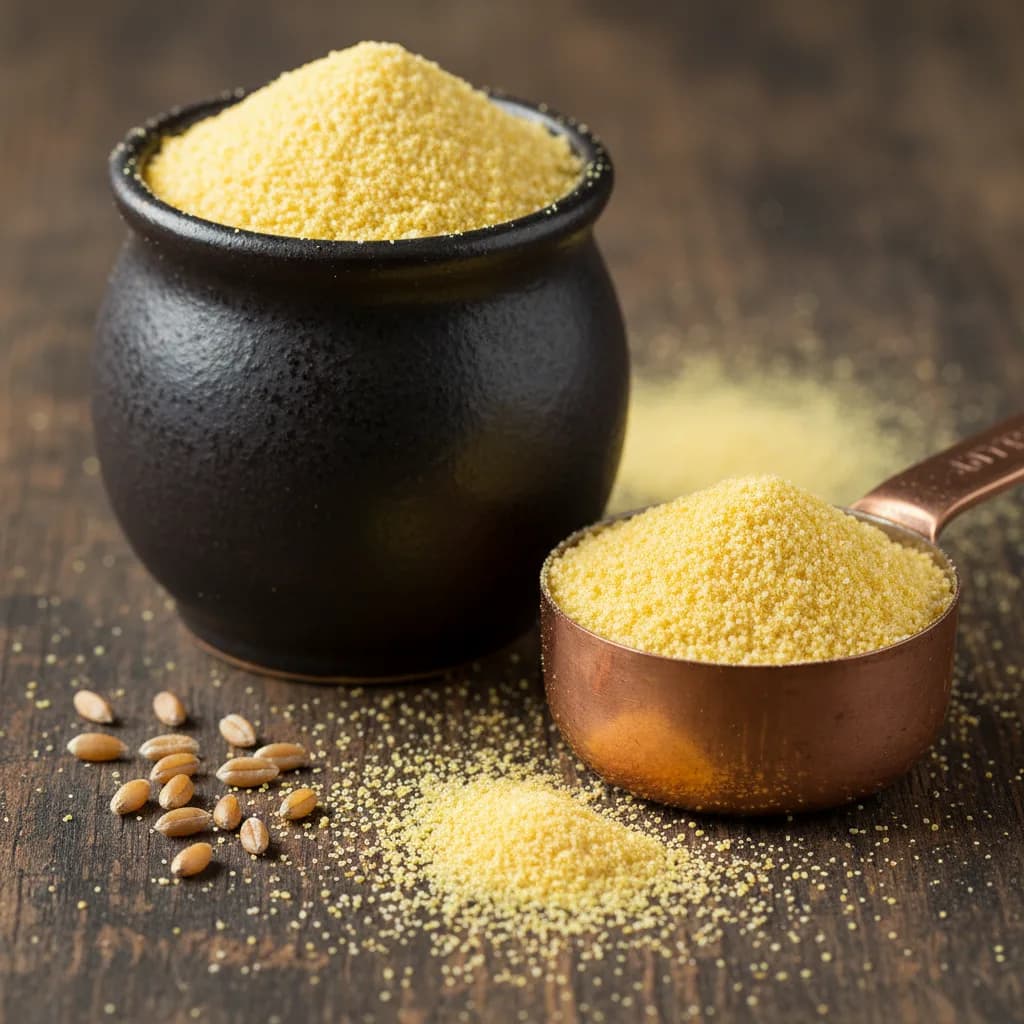
Types of Semolina Flour
Get some
On the shelf at your store. Live pricing is coming soon.
Add to shopping listStorage
Store in an airtight container in a cool, dry place. Semolina keeps indefinitely if kept dry and away from moisture and pests.
Cooking Tips
Use semolina for fresh pasta dough—its coarse texture creates a slightly firmer, chewier noodle than all-purpose flour.
Dust your work surface and pasta with semolina (not flour) to prevent sticking.
Mix semolina with all-purpose flour for a blend that's easier to work with than 100% semolina dough.
Semolina also makes creamy polenta and thick porridges—stir constantly to avoid lumps.
Common Mistakes
Confusing semolina with cornmeal—they are different grains and behave differently in cooking.
Using too much semolina in a dough, which can make it tough and hard to knead. Blend it with all-purpose flour for better results.
Not stirring polenta constantly, which leads to lumps and scorching.
Aliases
- Semolina Floursplural
/semolina-flours