
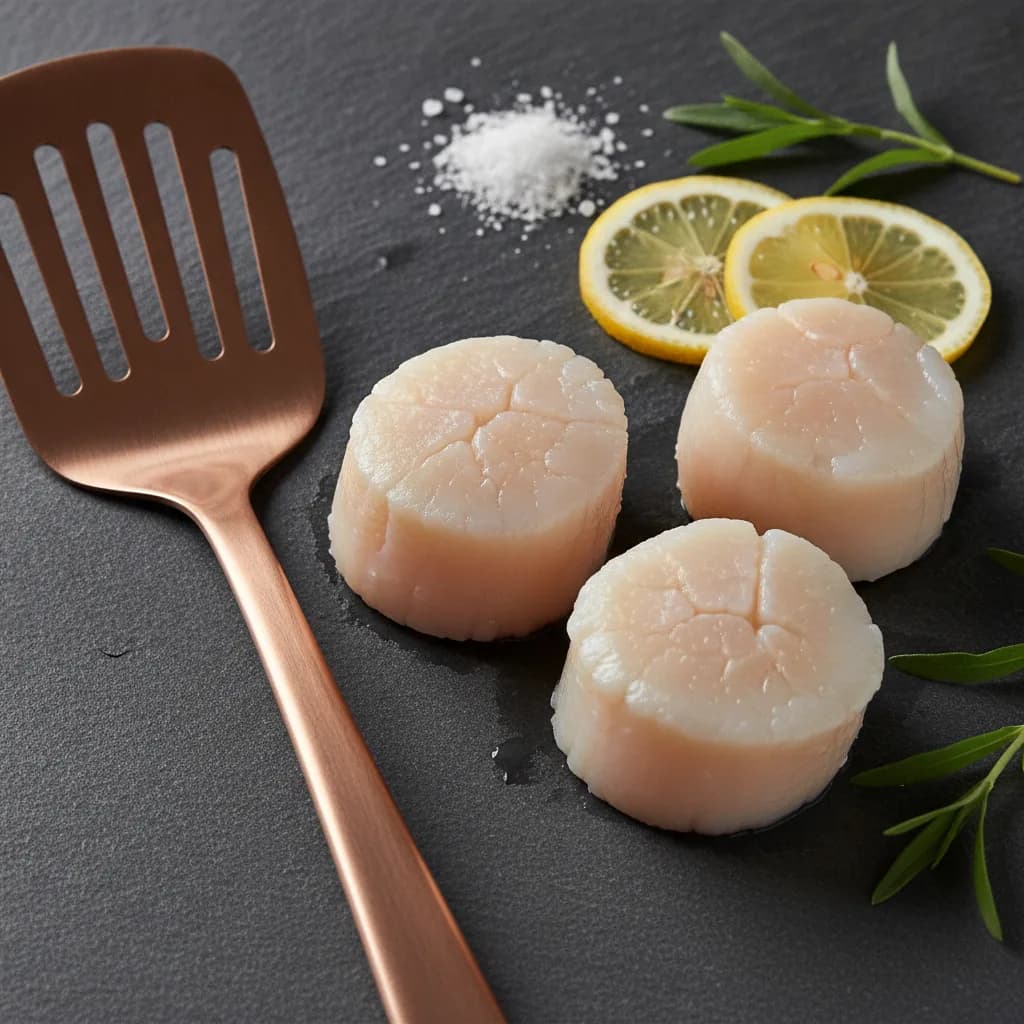
Types of Scallops
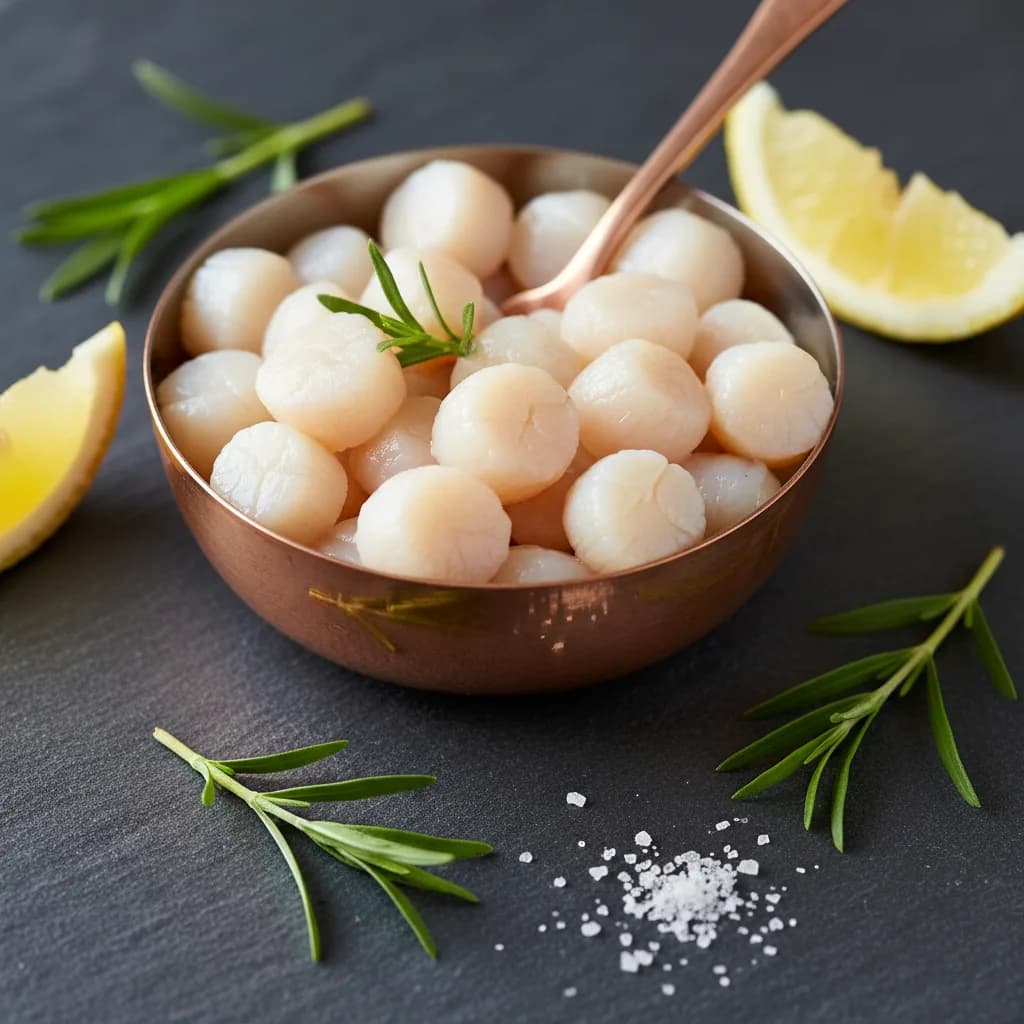
Get some
On the shelf at your store. Live pricing is coming soon.
Add to shopping listStorage
Fresh scallops spoil quickly and should be kept on ice in the coldest part of your fridge. Use the same day if possible. Frozen scallops (thawed in the fridge overnight) work well for most recipes. Pat dry before cooking to achieve a good sear.
Cooking Tips
Pat scallops completely dry with paper towels before searing—moisture prevents browning.
Use high heat and don't move them around the pan. Let them sit 2–3 minutes per side for a golden crust.
Season just before cooking to avoid drawing out moisture.
Avoid overcooking; scallops turn rubbery within seconds once they firm up. They're done when opaque throughout.
Pairs With
Lemon, garlic, and butter (classic preparation)
White wine and herbs like parsley or thyme
Asian flavors: soy, ginger, sesame oil
Risotto, pasta, or creamy sauces
Common Mistakes
Cooking wet scallops—the moisture prevents browning and creates steam instead of a sear.
Moving them constantly in the pan. Resist the urge; let them develop a crust.
Overcooking. Scallops need only 2–4 minutes total, depending on size.
Thawing frozen scallops at room temperature. Thaw slowly in the fridge to preserve texture.
Aliases
- Scallopplural
/scallop - Sea Scallopsmerged
/sea-scallops