
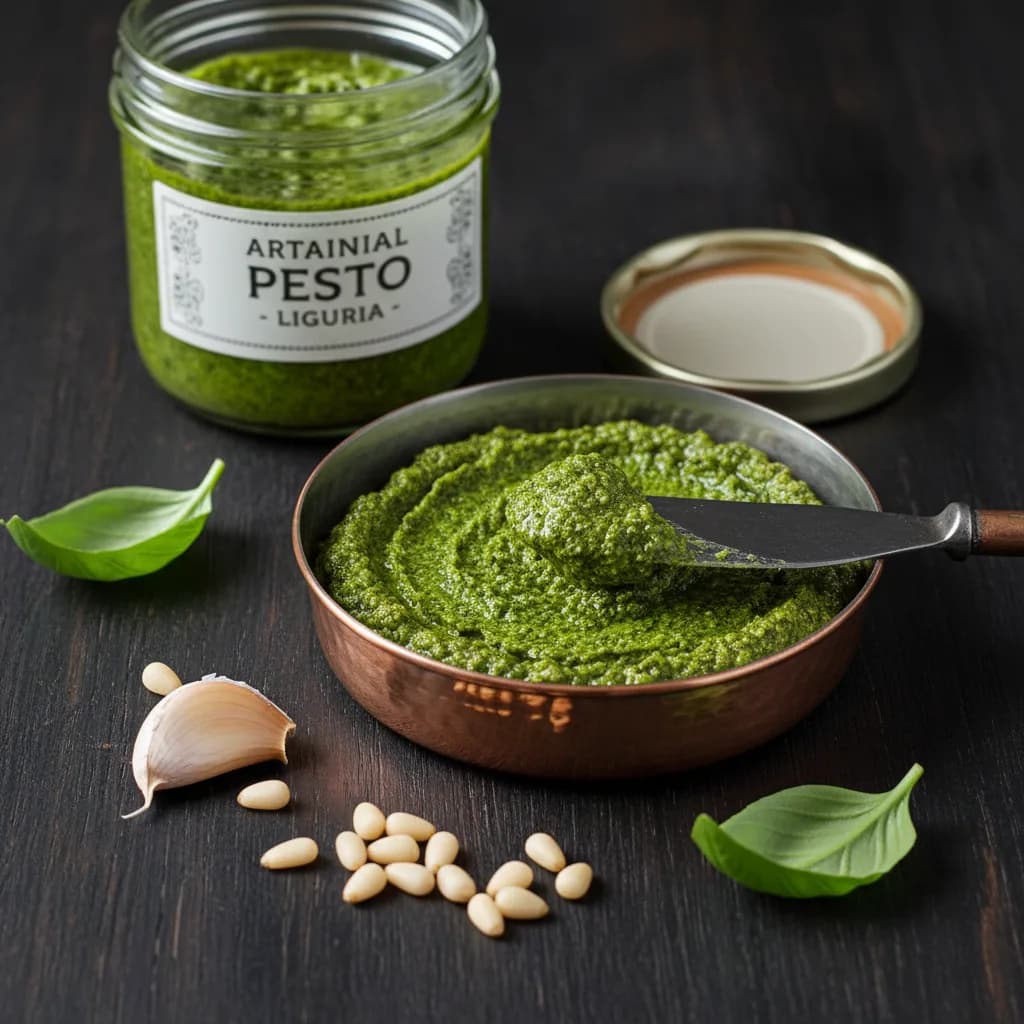
Pesto
A fresh Italian herb sauce with endless versatility
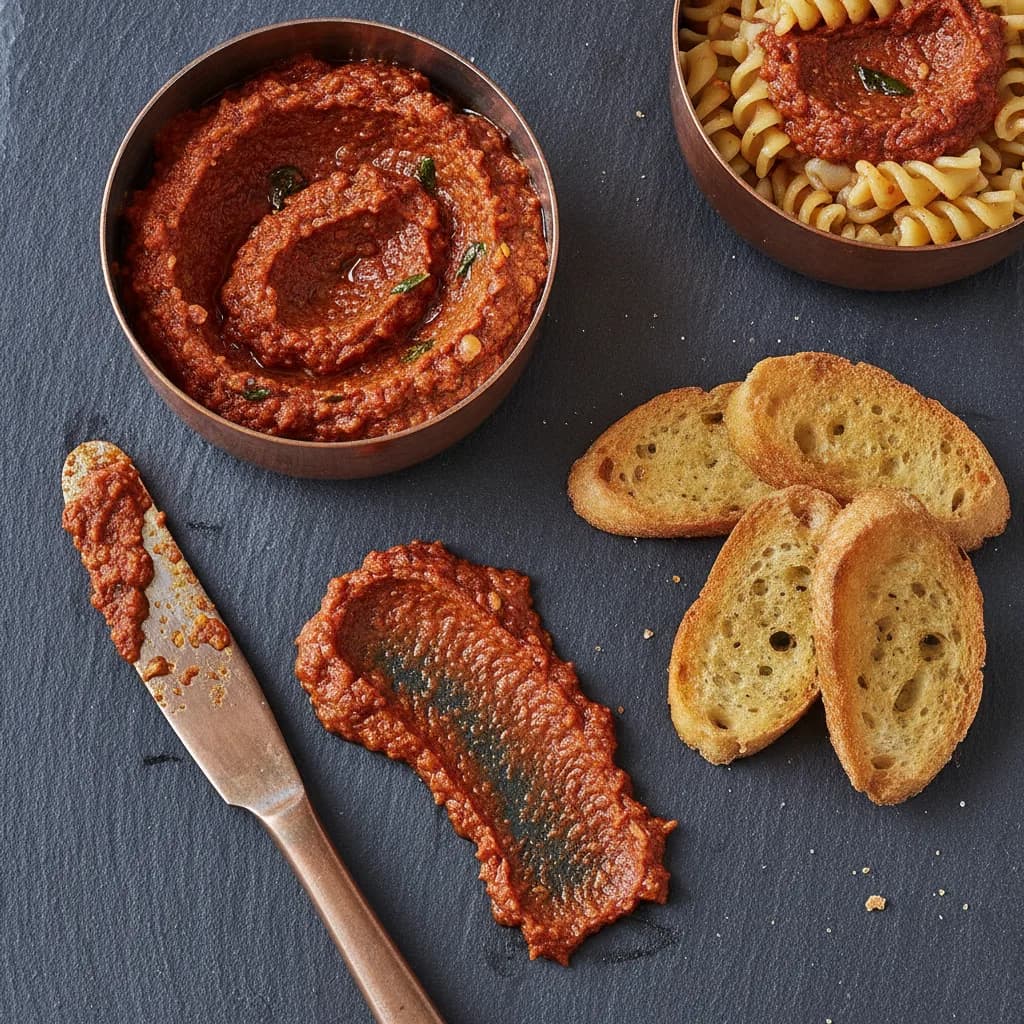
Types of Pesto
Get some
On the shelf at your store. Live pricing is coming soon.
Add to shopping listStorage
Store in an airtight container in the fridge. Pesto darkens over time due to oxidation—seal tightly to slow this. Freezing in ice cube trays is ideal for portioning. Room-temperature storage is not recommended due to dairy and potential spoilage.
Cooking Tips
Add pesto to pasta *after* cooking and tossing with pasta water—heat can darken the basil and make the sauce bitter.
Reserve a handful of fresh basil to stir in at the end for brightness and color.
Use a food processor or mortar and pestle; avoid blenders, which can overwork the basil and create a bitter, oxidized sauce.
Toast pine nuts lightly before blending to enhance their flavor.
Stir in grated Parmesan just before serving to prevent it from breaking down or becoming grainy.
Pairs With
Pasta (especially trofie, linguine, or trenette)
Grilled vegetables (zucchini, eggplant, tomatoes)
Soups (minestrone, white bean soup)
Crackers, crostini, or bread
Roasted potatoes
Fish (salmon, sea bass)
Tomatoes and fresh mozzarella
Common Mistakes
Overblending or using a blender: This heats and oxidizes the basil, turning it dark and bitter.
Adding pesto to boiling pasta water: Heat damages the fresh basil flavor and color.
Using old or wilted basil: The sauce relies entirely on fresh herb quality.
Not sealing well for storage: Exposure to air causes rapid discoloration and flavor loss.