
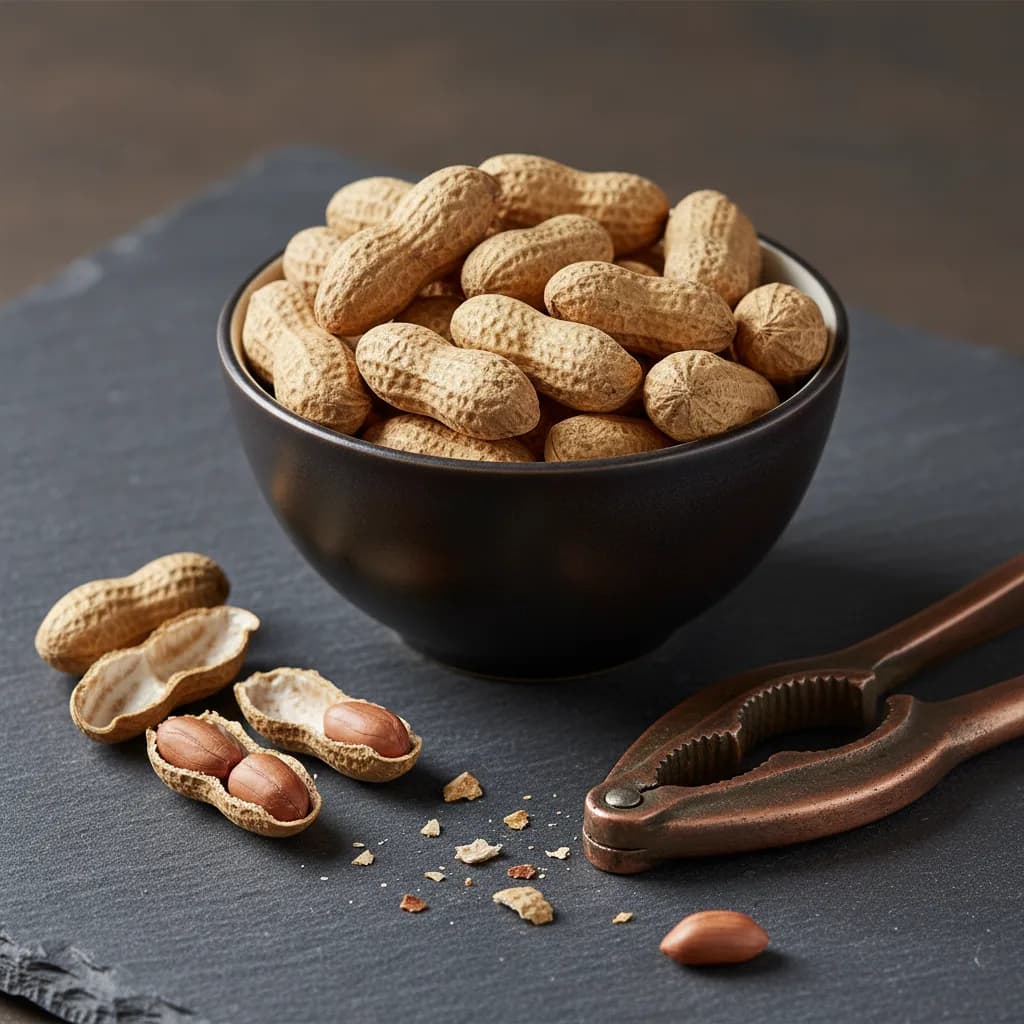
Peanuts
A protein-rich legume, not a tree nut
Types of Peanuts
Get some
On the shelf at your store. Live pricing is coming soon.
Add to shopping listStorage
Peanuts have natural oils that can go rancid; refrigerate or freeze for long-term storage to preserve freshness and prevent oxidation.
Keep in a cool, dry place away from humidity.
Nutrition
Values are for raw peanuts; roasted varieties may vary slightly.
Cooking Tips
Roast raw peanuts at 350°F for 8–10 minutes to deepen flavor and reduce raw taste.
Blanch shelled peanuts in boiling water for 3 minutes, then rub off skins for a milder texture.
Store in airtight containers to prevent absorption of odors and moisture.
Check for mold or off-smells before use; discard if rancid.
Pairs With
Soy sauce, ginger, garlic (Asian dishes)
Chili, lime, cilantro (Southeast Asian flavors)
Chocolate, honey (sweet applications)
Sesame oil, rice vinegar (dressings and sauces)
Common Mistakes
Storing in warm or humid conditions causes oils to oxidize and flavor to degrade quickly.
Confusing peanuts with tree nuts when checking allergen labels—peanuts are legumes and require separate allergen warnings.
Over-roasting, which makes them bitter and dries out texture.
Aliases
- Dry Roasted Peanutsalternate
/dry-roasted-peanuts - Dry-Roasted Peanutsalternate
/dry-roasted-peanuts-2 - Peanutplural
/peanut - Roasted Peanutsalternate
/roasted-peanuts - Salted Peanutsalternate
/salted-peanuts - Spanish Peanutsalternate
/spanish-peanuts - Unsalted Dry-Roasted Peanutsalternate
/unsalted-dry-roasted-peanuts-2 - Unsalted Peanutsalternate
/unsalted-peanuts