
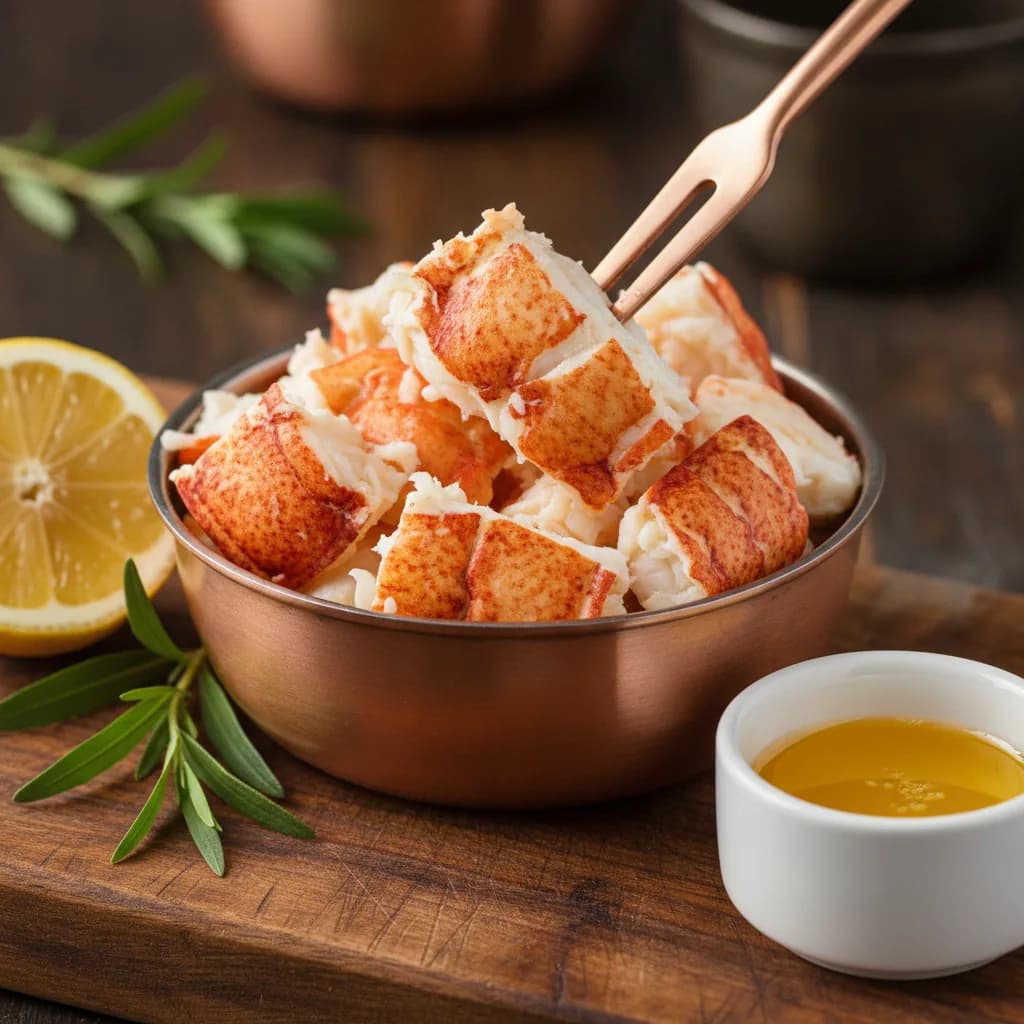
Types of Lobster Meat
Get some
On the shelf at your store. Live pricing is coming soon.
Add to shopping listStorage
Fresh lobster meat should be kept on ice or in the coldest part of the fridge. Cooked meat lasts slightly longer than raw. Freeze in airtight containers or vacuum-sealed bags to prevent freezer burn.
Cooking Tips
Buy pre-cooked and picked lobster meat to save time and effort—quality varies, so source from a trusted fishmonger.
Warm cooked lobster meat gently in butter or broth to avoid toughening; high heat will make it rubbery.
Tail meat is sweeter and more tender than claw meat, which has a stronger flavor and chewier texture.
Pat meat dry before cooking to encourage browning and prevent splattering.
Save shells for making lobster stock—it adds rich, briny depth to soups and sauces.
Pairs With
Butter (clarified, browned, or compound butters with herbs)
Lemon and fresh citrus
White wine and champagne-based sauces
Tarragon, dill, chervil, and parsley
Leeks, fennel, and light cream sauces
Pasta (especially tender shapes like angel hair or fettuccine)
Common Mistakes
Overcooking lobster meat, which turns it tough and stringy—warm gently and briefly.
Using extremely hot pans without fat, which dries out the delicate meat.
Freezing in regular containers without protection, leading to freezer burn and flavor loss.
Buying meat that has been thawed and refrozen, which degrades texture.
Aliases
- Lobster Meatsplural
/lobster-meats