
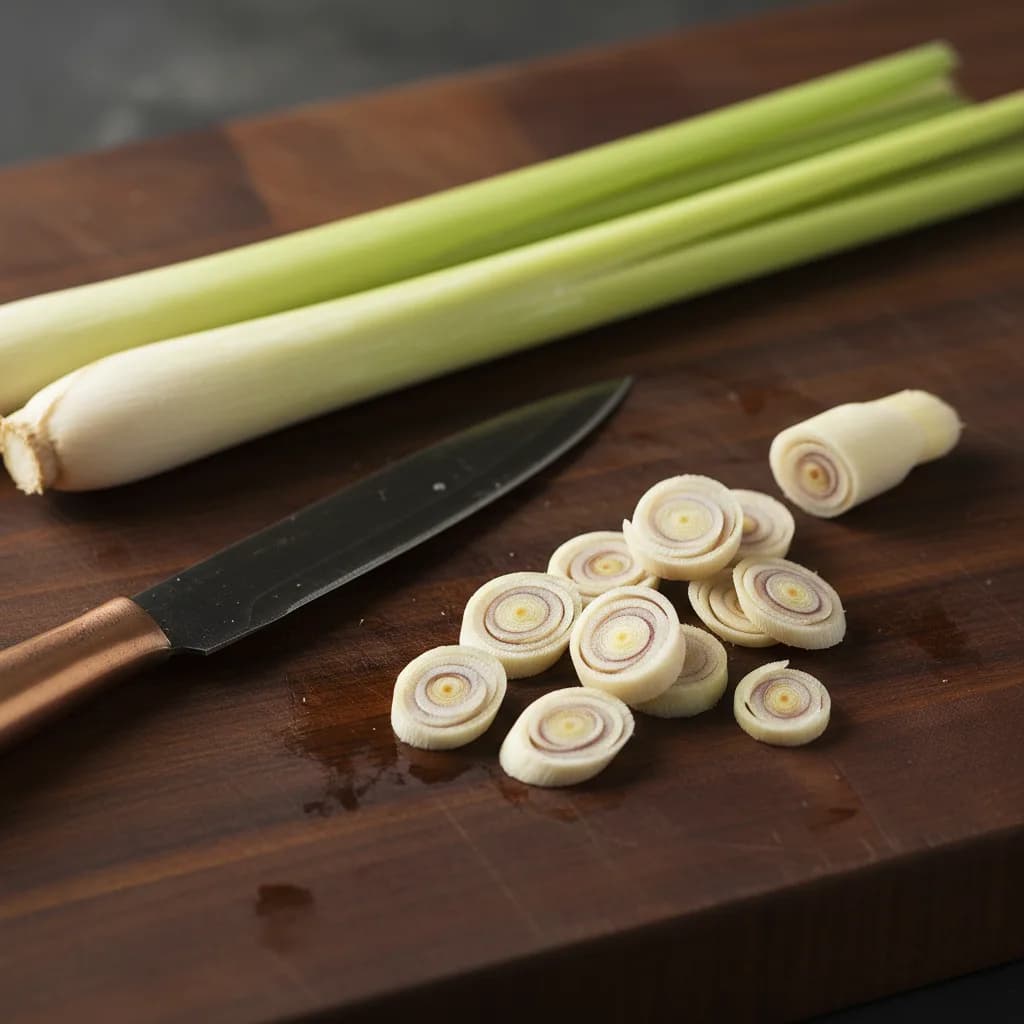
Lemon Grass
A fragrant Southeast Asian herb with bright lemon notes
Types of Lemon Grass
Get some
On the shelf at your store. Live pricing is coming soon.
Add to shopping listStorage
Store upright in a glass of water (like fresh herbs) or wrap in damp paper towel. Freezer storage: slice or chop before freezing in an airtight bag or ice cube tray with oil.
Cooking Tips
Only the tender white and pale green base (bottom 2–3 inches) is edible; discard the fibrous top leaves.
Bruise or lightly crush stalks before cooking to release more flavor.
For a milder flavor, remove the outer tough layer; for stronger flavor, slice thinly across the grain.
Fresh lemongrass works best in curries, soups, and infusions; dried works in tea but is less aromatic.
If using whole stalks in broth or curry, tie them in a knot so you can easily remove them after cooking.
Common Mistakes
Using the tough dry tops—they're too fibrous to eat; they're best discarded or reserved for tea/broth.
Not bruising or crushing the herb before cooking, missing out on its aromatic oils.
Cooking with the wrong part: use the tender base, not the whole stalk.
Substituting dried lemongrass 1:1 for fresh without adjusting intensity; dried is more concentrated.
Aliases
- Lemon Grassesplural
/lemon-grasses