
Get some
On the shelf at your store. Live pricing is coming soon.
Add to shopping listStorage
Store fresh leaves in a plastic bag in the crisper drawer. Freeze whole leaves (no prep needed) for long-term storage—they don't need thawing before use. Dried leaves keep for 1–2 years in an airtight container away from light and heat.
Cooking Tips
Tear or bruise the leaves lightly before adding to release their oils and flavor.
Remove whole leaves before serving if they're large; they're meant to infuse, not be eaten.
Frozen leaves work well in cooked dishes; fresh leaves are best for delicate applications like salads or garnishes.
Dried leaves are more concentrated in flavor than fresh—use about half the amount.
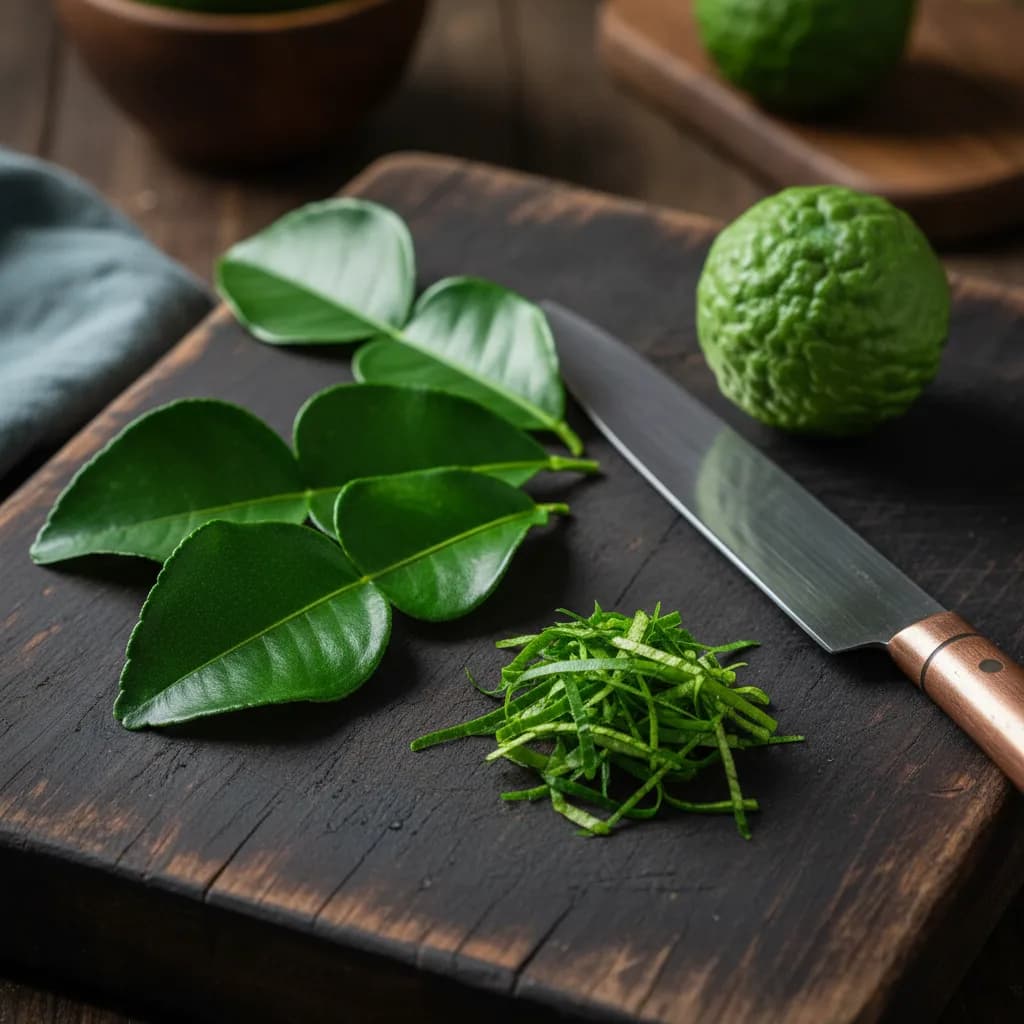
Double-lobed leaves (hourglass shape) are the true kaffir lime leaf; single-lobed leaves are from regular lime trees.
Pairs With
Thai green and red curries
Coconut-based soups (tom yum, tom kha gai)
Stir-fries with fish, chicken, or shrimp
Pad Thai and noodle dishes
Rice dishes and risotto
Desserts and beverages (particularly Southeast Asian-inspired sweets and teas)
Seafood braises and steamed dishes
Common Mistakes
Confusing kaffir lime leaves with regular lime leaves or bay leaves—they're not interchangeable.
Using too many leaves and overwhelming a dish; start with 1–2 leaves per serving and adjust.
Not bruising or tearing the leaves, which limits flavor release.
Discarding frozen leaves thinking they're ruined; they thaw and work fine in cooking.
Aliases
- Kaffir Lime Leafplural
/kaffir-lime-leaf