
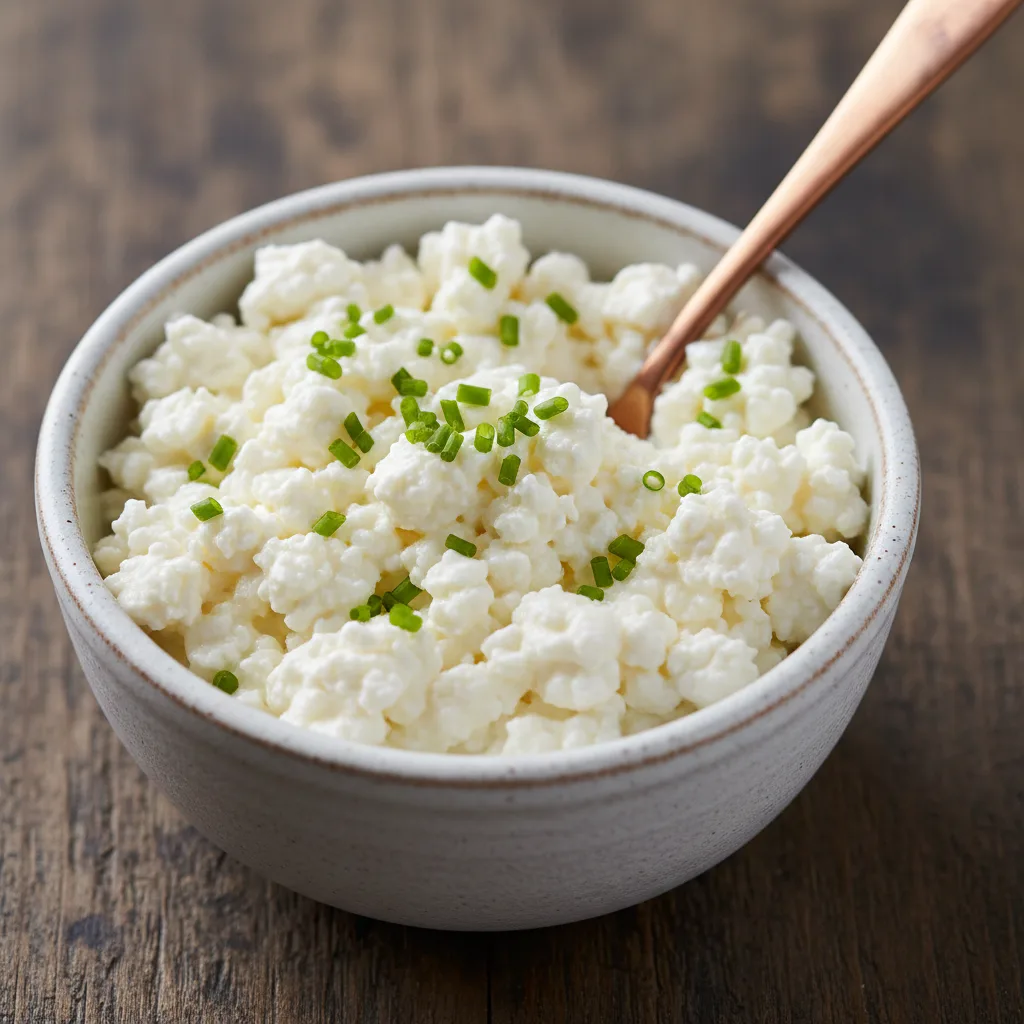
Cottage Cheese
A high-protein fresh cheese with mild flavor and lumpy texture
Types of Cottage Cheese
Get some
On the shelf at your store. Live pricing is coming soon.
Add to shopping listStorage
Keep refrigerated at all times. Use within 5-7 days of opening. Freezing not recommended as it separates and becomes grainy when thawed.
Nutrition
Values for 4% milkfat cottage cheese; low-fat versions have fewer calories and less fat
Cooking Tips
Drain excess liquid before using in recipes for better texture and flavor concentration
Blend smooth for a ricotta-like consistency in lasagna or stuffed shells
Add fresh herbs, black pepper, or everything bagel seasoning for a quick savory snack
Choose small curd for smoother texture in baking, large curd for salads and bowls
Pairs With
Fresh fruit (peaches, berries, pineapple) for breakfast bowls
Tomatoes, cucumbers, and olive oil for savory salads
Honey and cinnamon for a sweet snack
Crackers and raw vegetables for a protein-rich dip
Pasta dishes as a lighter alternative to ricotta
Common Mistakes
Using cottage cheese past its expiration date—it sours quickly once opened
Not draining watery cottage cheese before adding to recipes, which can make dishes runny
Freezing cottage cheese, which destroys the texture and makes it grainy
Aliases
- 1% Cottage Cheesealternate
/1-cottage-cheese - 2% Cottage Cheesealternate
/2-cottage-cheese - 2% Milkfat Low Fat Cottage Cheesealternate
/2-milkfat-low-fat-cottage-cheese - Cottage Cheesesplural
/cottage-cheeses - Creamed Cottage Cheesealternate
/creamed-cottage-cheese - Dry Cottage Cheesealternate
/dry-cottage-cheese - Dry Curd Cottage Cheesealternate
/dry-curd-cottage-cheese - Dry-Curd Cottage Cheesealternate
/dry-curd-cottage-cheese-2