
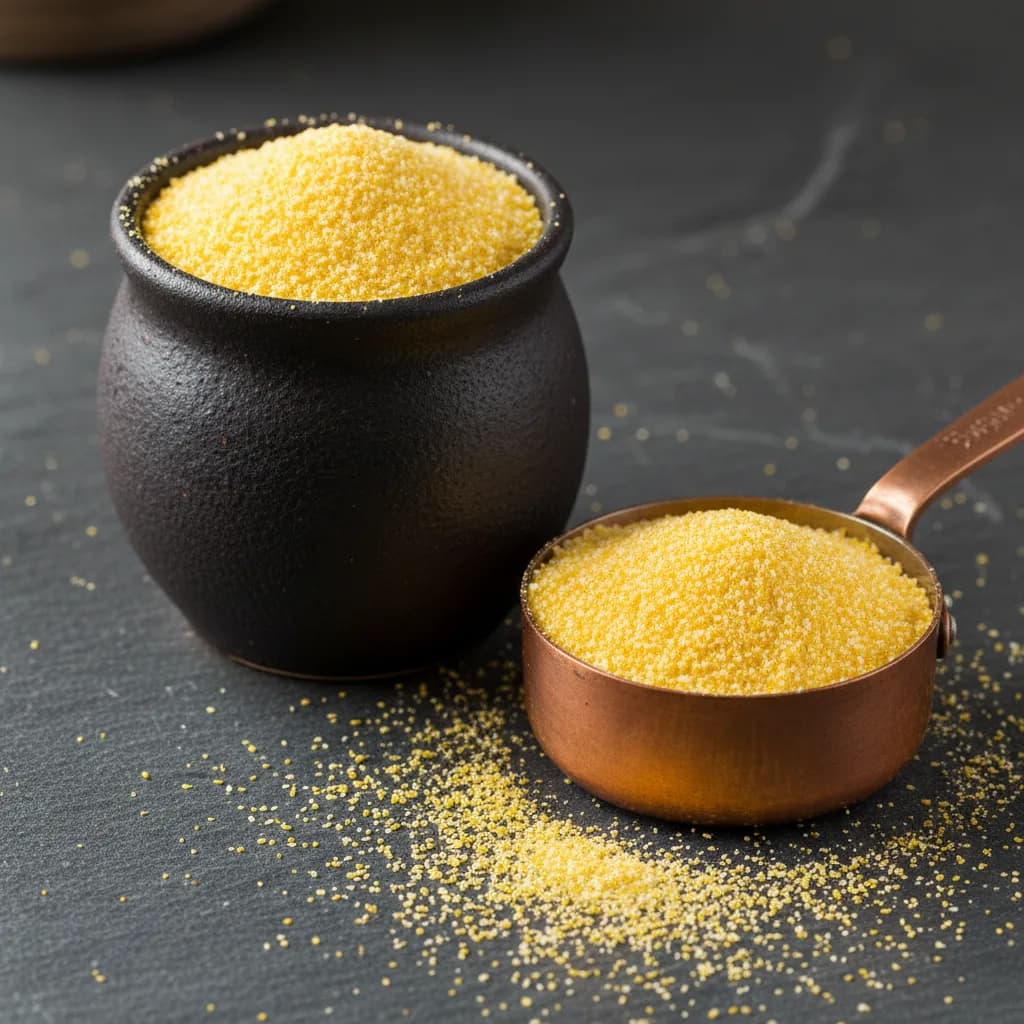
Get some
On the shelf at your store. Live pricing is coming soon.
Add to shopping listStorage
Store in an airtight container in a cool, dry place. Refrigerate or freeze for longer shelf life, especially for whole-grain or stone-ground varieties which contain more oils and can go rancid.
Cooking Tips
Fine cornmeal works best for baking delicate cornbread and muffins, while medium or coarse grinds are ideal for polenta and rustic breads
Toast cornmeal in a dry skillet for a few minutes to enhance its nutty, corn flavor before using in recipes
For crispier coatings on fried foods, mix cornmeal with flour or use it alone for a crunchy, golden crust
Yellow and white cornmeal are interchangeable in recipes; the difference is mainly visual and subtle flavor variations
Pairs With
Pairs naturally with butter, honey, and maple syrup in baked goods
Complements sharp cheeses like cheddar and parmesan in savory dishes
Works well with chili peppers, cumin, and lime in Southwestern and Mexican cooking
Enhances fried fish, chicken, and vegetables as a crispy coating
Common Mistakes
Using cornmeal and cornstarch interchangeably—they are completely different products with different uses
Not adjusting liquid when substituting fine cornmeal for coarse (or vice versa), which can make baked goods too dry or gummy
Storing whole-grain cornmeal at room temperature for too long, leading to rancid, bitter flavors
Confusing cornmeal with polenta—while similar, polenta is traditionally a coarser grind and Italian-specific preparation
Aliases
- Coarse Cornmealalternate
/coarse-cornmeal - Cornmealsplural
/cornmeals - Stone Ground Cornmealalternate
/stone-ground-cornmeal - White Cornmealalternate
/white-cornmeal - Yellow Cornmealalternate
/yellow-cornmeal