
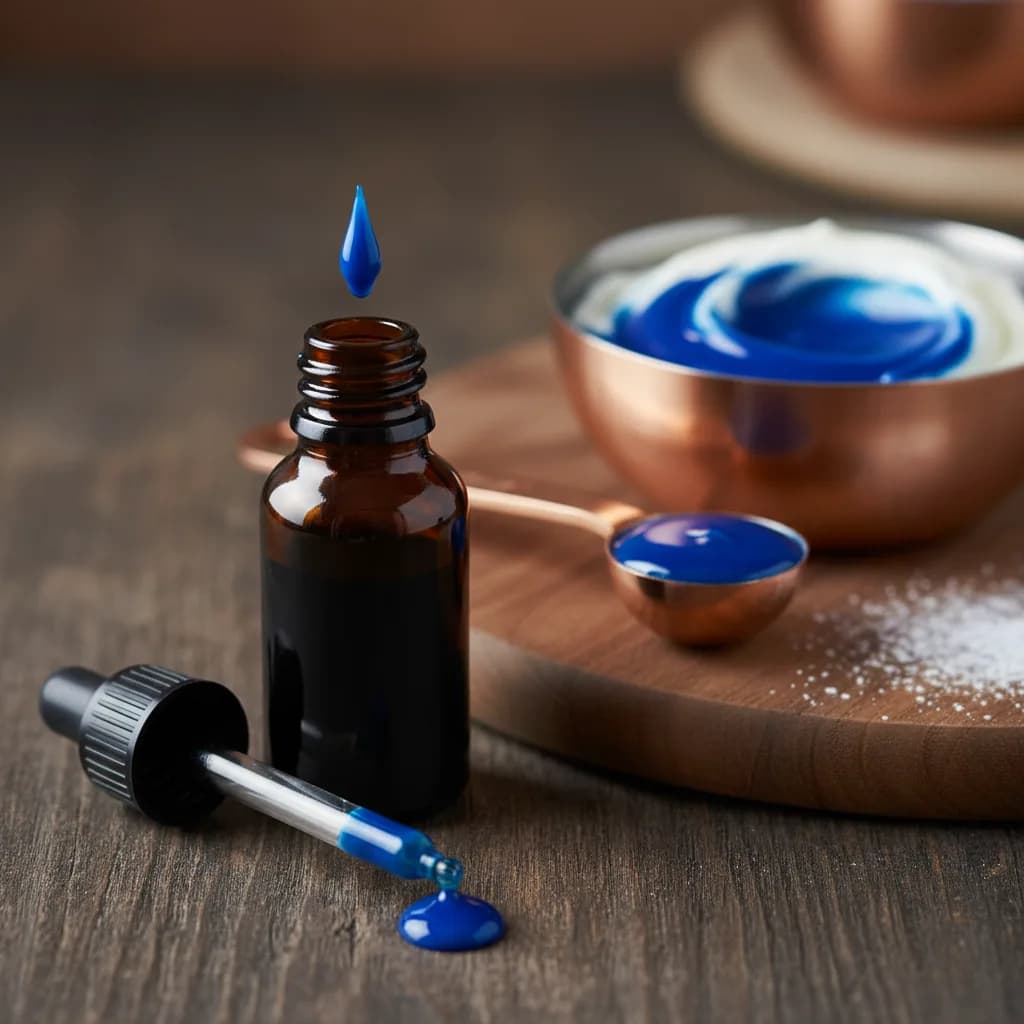
Types of Blue Food Coloring
Get some
On the shelf at your store. Live pricing is coming soon.
Add to shopping listStorage
Store in a cool, dry place away from direct sunlight. Ensure the cap is tightly sealed to prevent drying out, especially for gel or paste versions. Most food colorings have a long shelf life if stored properly.
Nutrition
Cooking Tips
Start with a small amount and add more gradually to achieve the desired shade. It's easier to add more color than to take it away.
Gel or paste food colorings are more concentrated than liquid versions and are ideal for coloring doughs or icings without adding excess moisture.
Consider the base of your food: oil-based colors work best in fatty foods like chocolate or buttercreams, while water-based colors are suitable for most other applications.
Blue can be a tricky color to achieve naturally; artificial coloring is often the most reliable way to get a true blue.
Common Mistakes
Adding too much color at once, resulting in an overly intense or unnatural shade.
Using the wrong type of food coloring for the base (e.g., water-based in oil-based frosting).
Not mixing thoroughly, leading to streaks or uneven coloring.
Aliases
- Blue Food Coloringprimarycanonical
/blue-food-coloring-2 - Blue Food Coloringsplural
/blue-food-colorings