
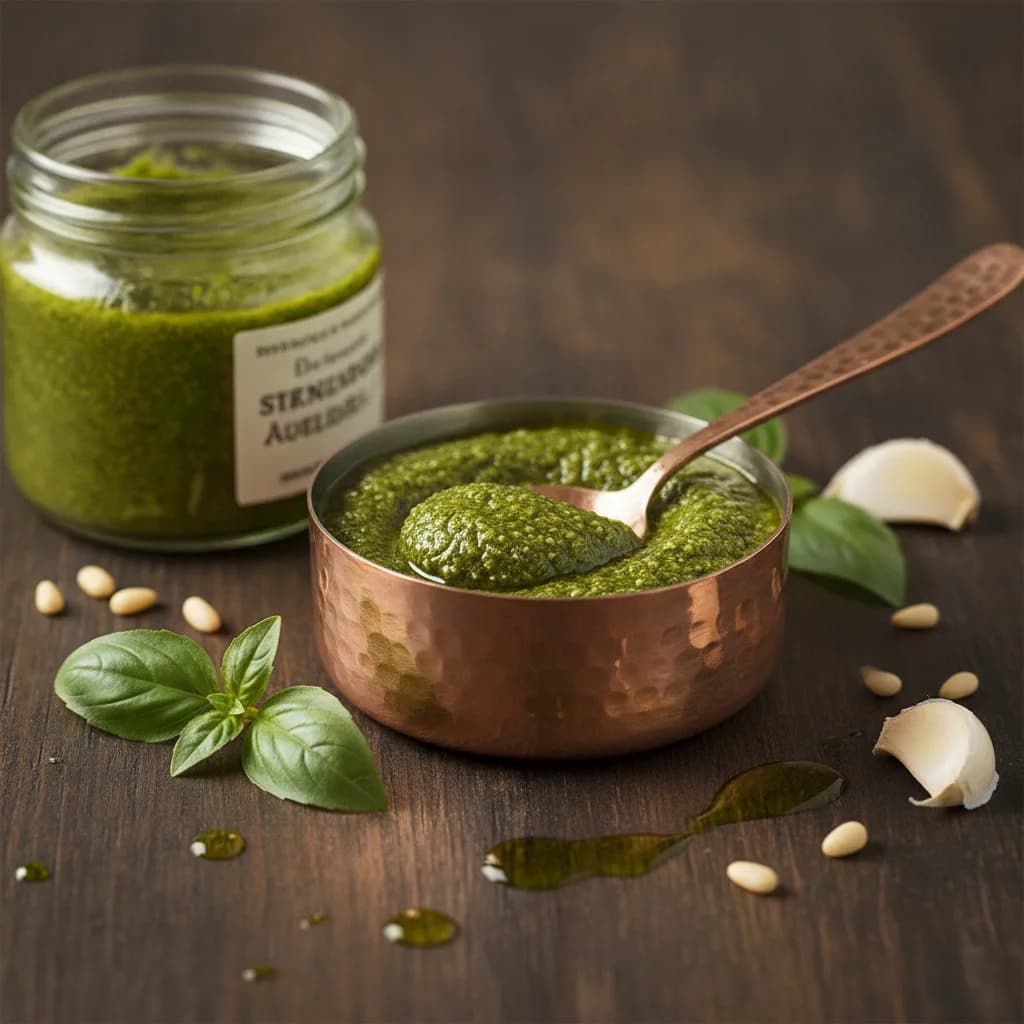
Basil Pesto
A fresh Italian herb sauce
Types of Basil Pesto
Get some
On the shelf at your store. Live pricing is coming soon.
Add to shopping listStorage
Store in an airtight container in the refrigerator. A thin layer of olive oil on top helps prevent browning. Freezes well in ice cube trays for portioning. Avoid storing near strong-smelling foods as basil absorbs odors.
Cooking Tips
Use a mortar and pestle rather than a food processor to keep the basil from bruising and turning brown.
Add Parmesan cheese after pounding other ingredients to preserve its texture.
Use fresh basil within a day or two of purchase for the best flavor.
Toss pesto with warm pasta gently—heat will cause it to darken and lose some brightness.
Thin with pasta water or extra olive oil if the sauce seems too thick.
Pairs With
Pasta (especially linguine or fettuccine)
Tomato-based soups and minestrone
Roasted vegetables (zucchini, eggplant, tomatoes)
Grilled chicken or fish
Sandwiches and focaccia
Baked potatoes and grains
Cream cheese on crostini
Common Mistakes
Over-processing the basil, which oxidizes it and turns the pesto brown.
Adding cheese too early in the process, making it gritty.
Using old or bruised basil, which affects flavor and appearance.
Cooking the pesto on high heat instead of using it cold or warming gently.
Aliases
- Basil Pestoprimarycanonical
/basil-pesto-2 - Basil Pestosplural
/basil-pestos