
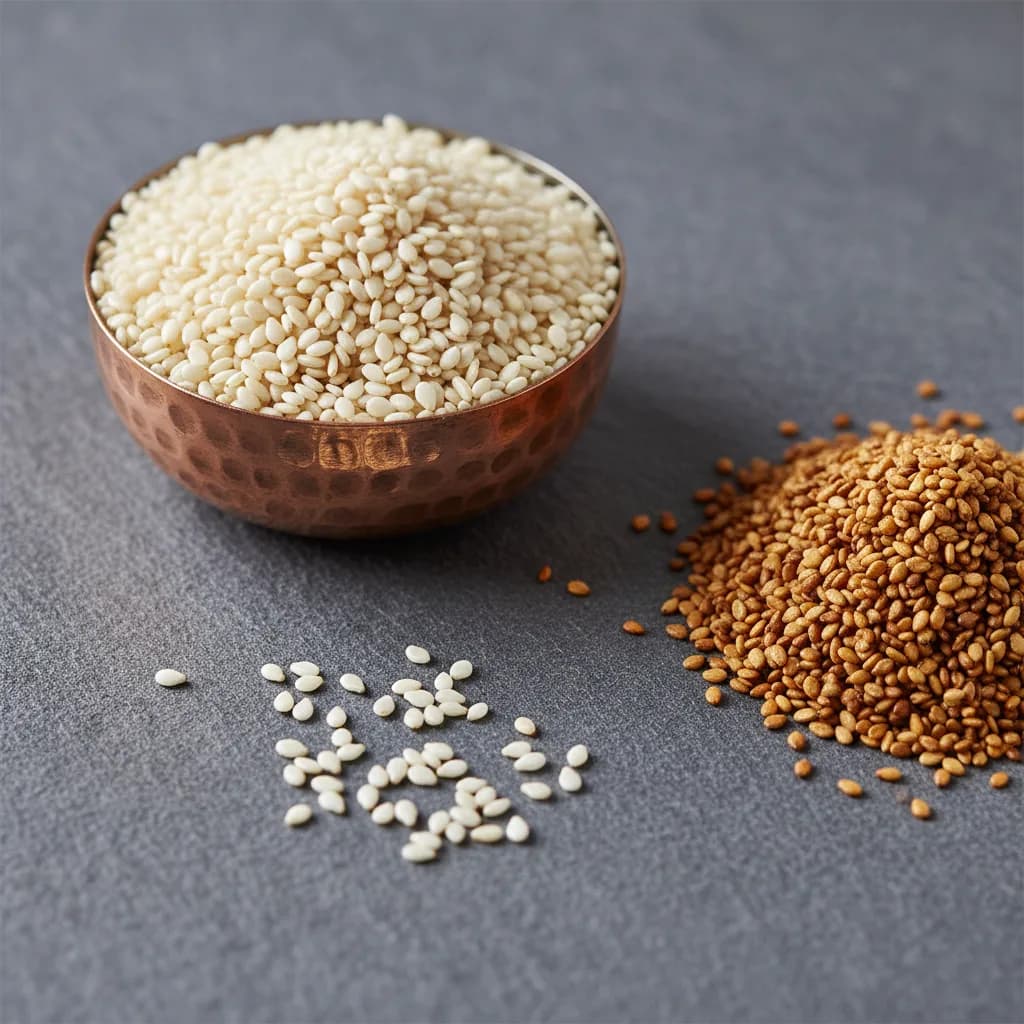
Sesame Seeds
Nutty, oil-rich seeds and ancient culinary staple
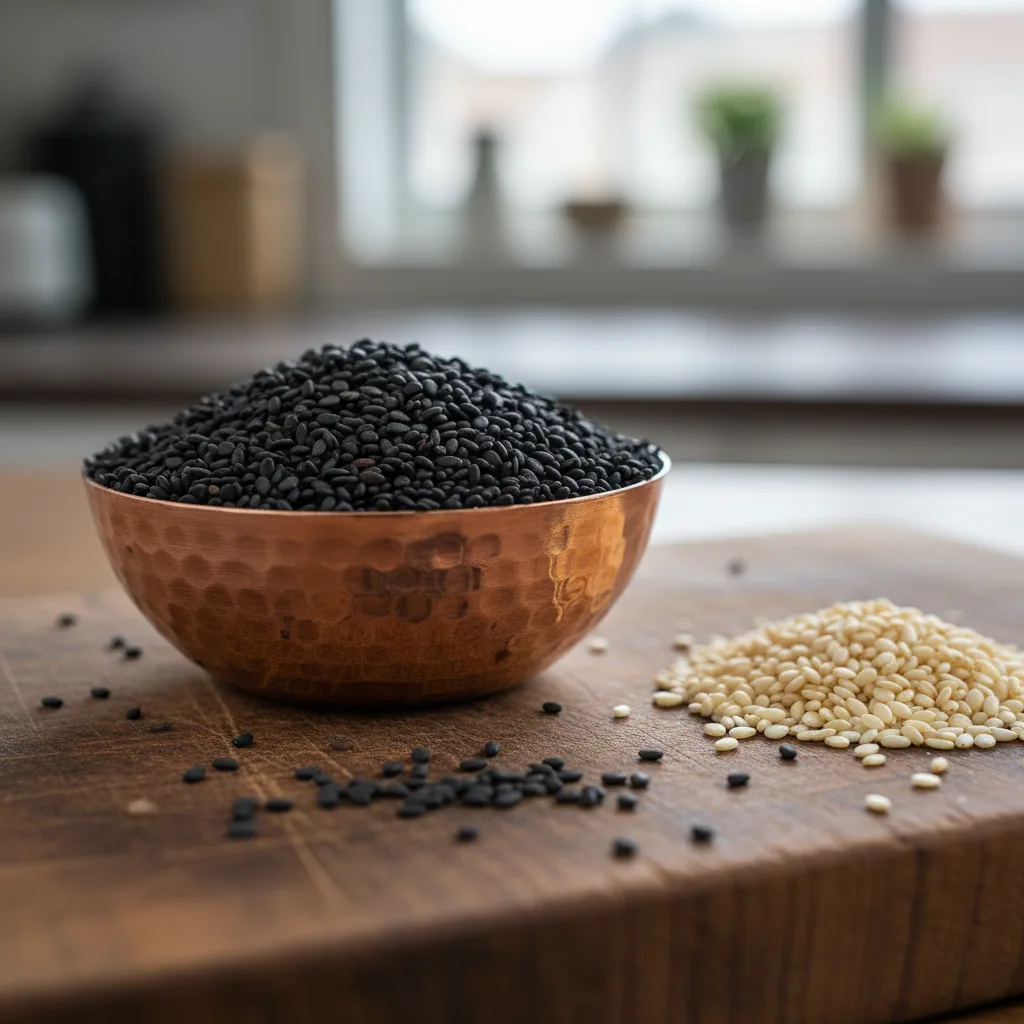
Types of Sesame Seeds
Get some
On the shelf at your store. Live pricing is coming soon.
Add to shopping listStorage
Store in an airtight container away from light and heat. High oil content means they can go rancid; refrigeration extends freshness. Toasted seeds have shorter shelf life.
Nutrition
Rich in copper, manganese, calcium, magnesium, iron, and B vitamins. High in healthy fats, particularly polyunsaturated and monounsaturated.
Cooking Tips
Toast in a dry skillet over medium heat for 2-3 minutes, stirring constantly, until fragrant and lightly golden
Add at the end of cooking or as a garnish to preserve crunch and prevent burning
Black sesame seeds have a slightly stronger, earthier flavor than white varieties
Grind into homemade tahini by processing toasted seeds with a bit of neutral oil until smooth
Pairs With
Soy sauce, ginger, and garlic in Asian stir-fries and dressings
Honey and tahini for Middle Eastern sweets and halva
Bagels, breads, and crackers as a classic topping
Green vegetables like bok choy, green beans, and asparagus
Noodle dishes, rice bowls, and poke bowls as garnish
Common Mistakes
Burning during toasting—they go from golden to burnt in seconds, so watch closely and remove from heat immediately
Using stale seeds that taste bitter or flat; fresh seeds should smell nutty and sweet
Adding to high-heat cooking too early, causing them to burn and turn bitter
Aliases
- Sesame Seedalternate
/sesame-seed - Toasted Sesame Seedsmerged
/toasted-sesame-seeds