
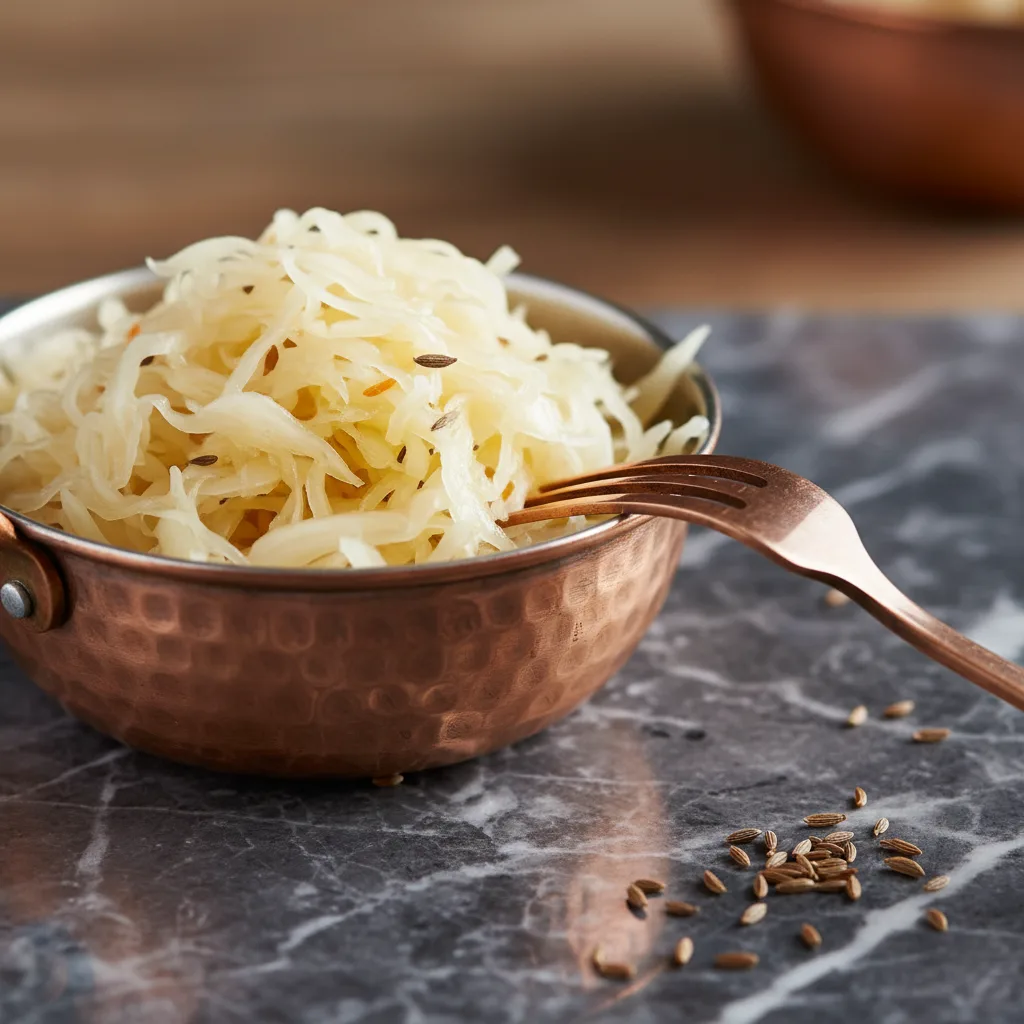
Sauerkraut
Fermented cabbage with tangy bite and live probiotics
Types of Sauerkraut
Get some
On the shelf at your store. Live pricing is coming soon.
Add to shopping listStorage
Store unopened jars in a cool, dark place indefinitely. Once opened, keep refrigerated; the cool temperature slows fermentation and extends shelf life for months. Sauerkraut can continue fermenting slowly in the fridge—this is normal and safe.
Cooking Tips
Use raw sauerkraut as a topping or side to preserve live probiotic cultures; heating above 120°F kills them.
Taste before using—acidity and saltiness vary between brands and batches. Rinse if too salty for your dish.
Pair with fatty foods (sausages, pork, salmon) to cut richness and aid digestion.
Homemade sauerkraut requires only cabbage and salt (about 2% by weight); no special equipment needed.
Pairs With
Pork and sausages
Fatty fish (salmon, mackerel)
Rye bread and sandwiches
Root vegetables and stews
Soft cheeses
Eggs and breakfast dishes
Common Mistakes
Overcooking or heating sauerkraut destroys beneficial probiotics—add it at the end of cooking or serve cold.
Using too little salt during fermentation risks mold or spoilage; aim for 2–3% salt by cabbage weight.
Assuming store-bought sauerkraut is always probiotic—pasteurized varieties have no live cultures; check the label.
Aliases
- Sauerkrautsplural
/sauerkrauts