
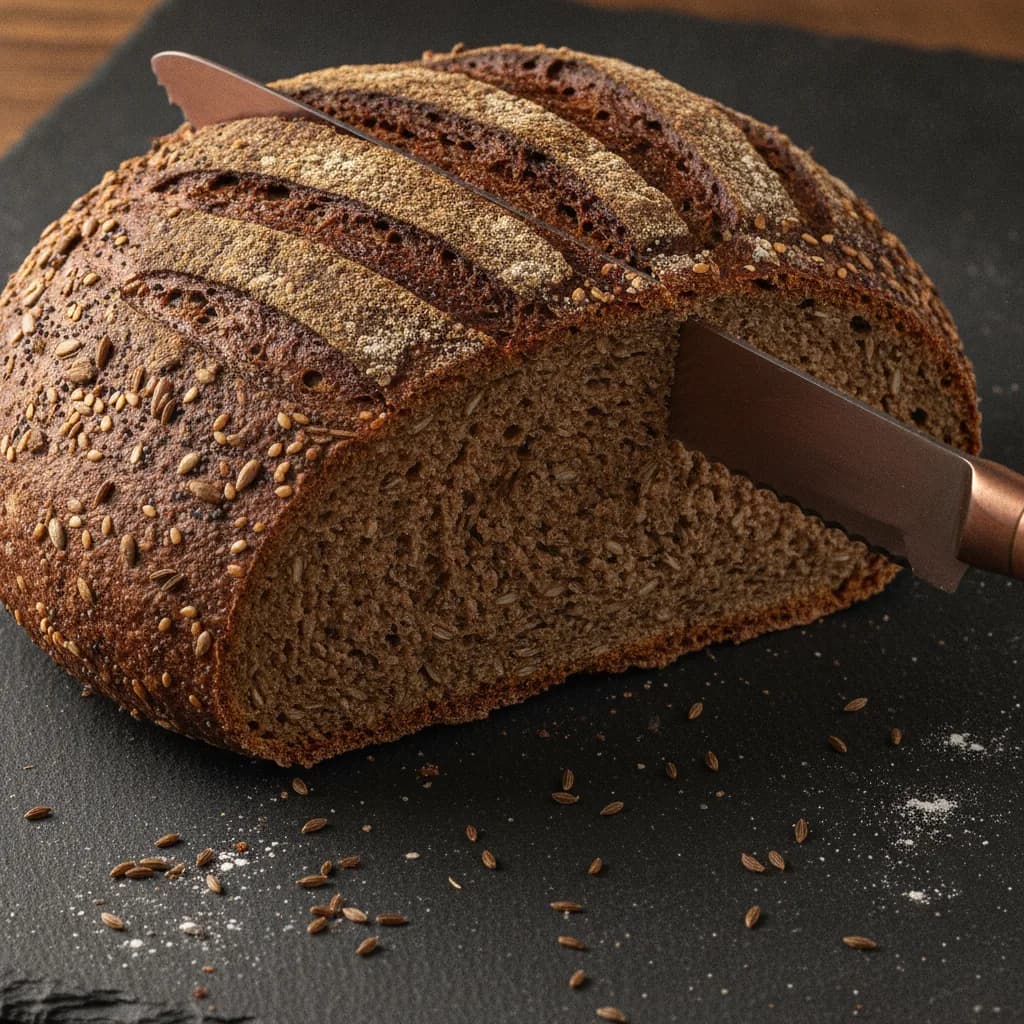
OriginNorthern and Eastern Europe (Germany, Poland, Russia, Scandinavia)
Fiber contentHigher than wheat bread
Flavor profileEarthy, slightly tangy, nutty
Drill down
Types of Rye Bread
Buy it or make it
Get some
Buy it
Common carton size
On the shelf at your store. Live pricing is coming soon.
Add to shopping listStorage
Keep in an airtight bag or wrapped in plastic. Rye bread stays fresher longer than wheat bread due to its density. Slice before freezing for easy thawing.
Cooking Tips
Toast rye bread lightly to bring out its nutty, earthy flavors.
Use it for open-faced sandwiches with smoked fish, beets, or pickled vegetables.
Rye flour absorbs more water than wheat flour, so the dough will feel wetter—this is normal.
The tangy flavor develops naturally from fermentation; don't rush the rise.
Common Mistakes
Using pure rye flour makes bread dense and crumbly; blend with wheat flour for better structure.
Overbaking dries it out quickly; watch baking time carefully.
Slicing while warm can cause crumbling; let it cool completely first.
Also called
Aliases
- Rye Breadsplural
/rye-breads