
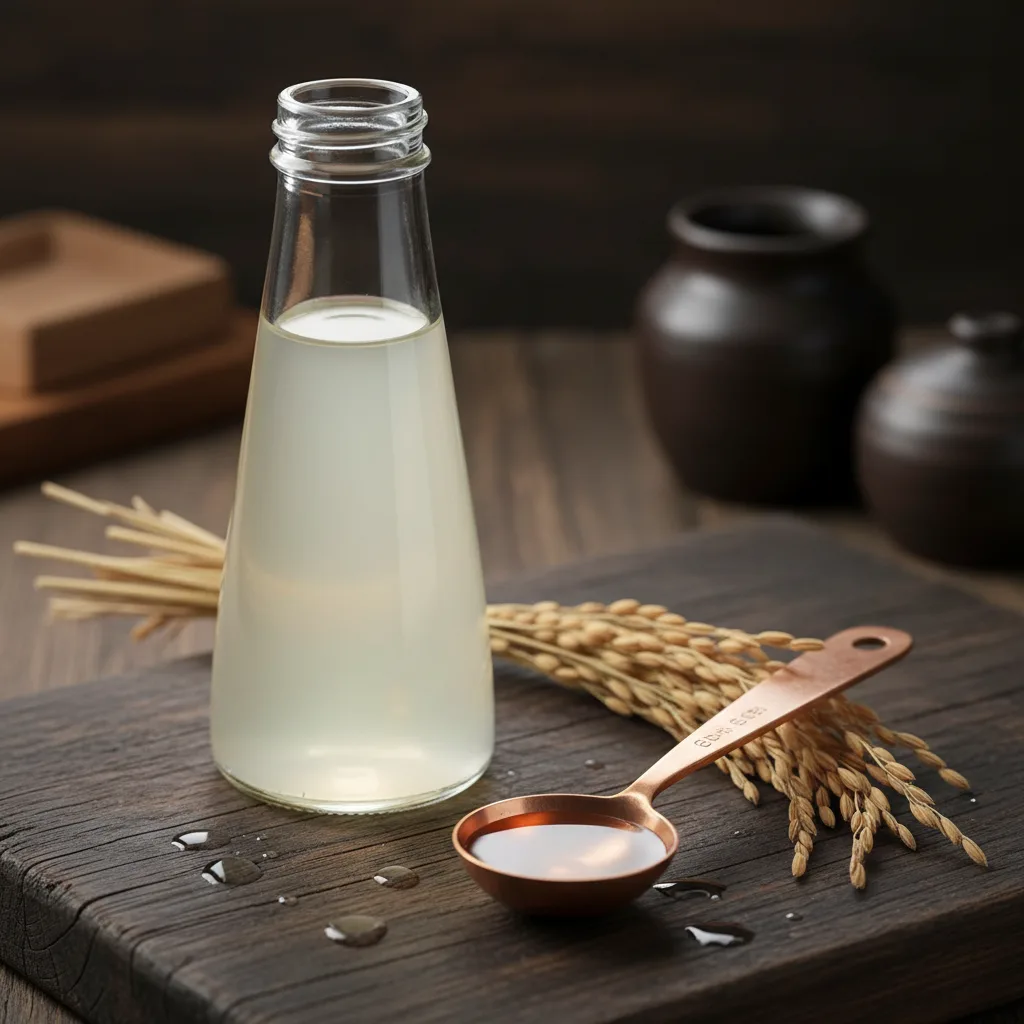
Types of Rice Vinegar
Get some
On the shelf at your store. Live pricing is coming soon.
Add to shopping listStorage
Vinegar is naturally preserved by its acidity. No refrigeration needed. Avoid direct sunlight to preserve color and flavor.
Unopened bottles store indefinitely in a cool, dark pantry. Once opened, use within 1–2 years for best flavor.
Cooking Tips
Rice vinegar is milder than distilled or white vinegar—use it when you want tang without harshness.
Seasoned rice vinegar (mirin and salt added) is common in sushi and Asian dishes; unseasoned vinegar gives you control over sweetness and salt.
Add at the end of cooking or to cold dishes to preserve its delicate flavor.
A splash in soups, stir-fries, or pickles brightens flavors without overpowering.
Pairs With
Soy sauce, ginger, and sesame oil in dressings and marinades
Mirin and soy sauce in glazes and dipping sauces
Cucumbers, daikon, and carrots in pickles
Rice, vegetables, and seafood in sushi and chirashi bowls
Stir-fries with garlic, scallions, and chili
Common Mistakes
Using seasoned rice vinegar when unseasoned is called for (or vice versa) — check your bottle label.
Boiling or heating rice vinegar aggressively can mute its subtle sweetness.
Substituting regular white vinegar 1:1 without reducing quantity — rice vinegar is gentler, so white vinegar may taste too sharp.
Aliases
- Rice Vinegarsplural
/rice-vinegars - Rice Wine Vinegaralternate
/rice-wine-vinegar - Seasoned Rice Vinegaralternate
/seasoned-rice-vinegar