
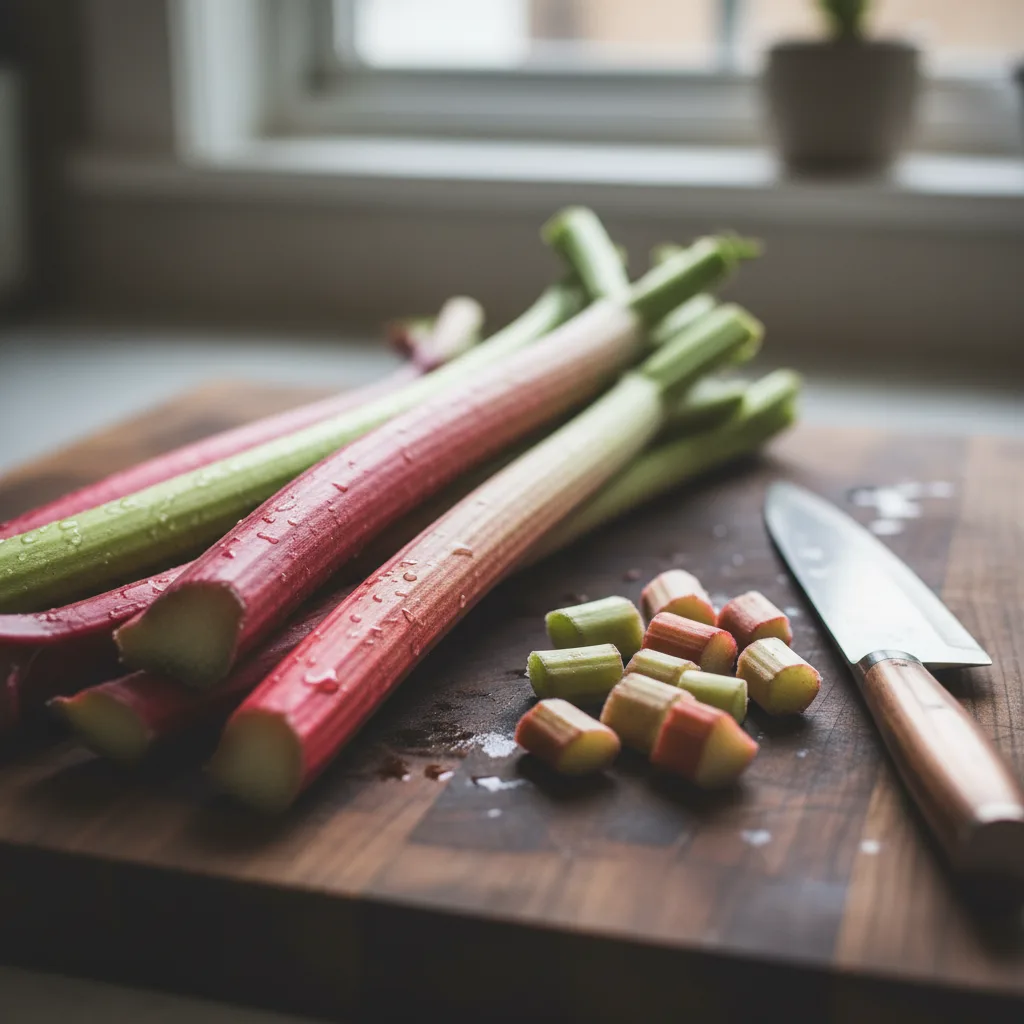
Rhubarb
A tart spring vegetable, perfect for pies and preserves
Types of Rhubarb
Get some
On the shelf at your store. Live pricing is coming soon.
Add to shopping listStorage
Wrap stalks loosely in plastic or store in a produce bag in the refrigerator crisper. For freezing, chop into 1–2 inch pieces, spread on a tray to freeze solid, then transfer to freezer bags. Frozen rhubarb works well for cooked applications like pies and jams but loses crispness for raw eating.
Cooking Tips
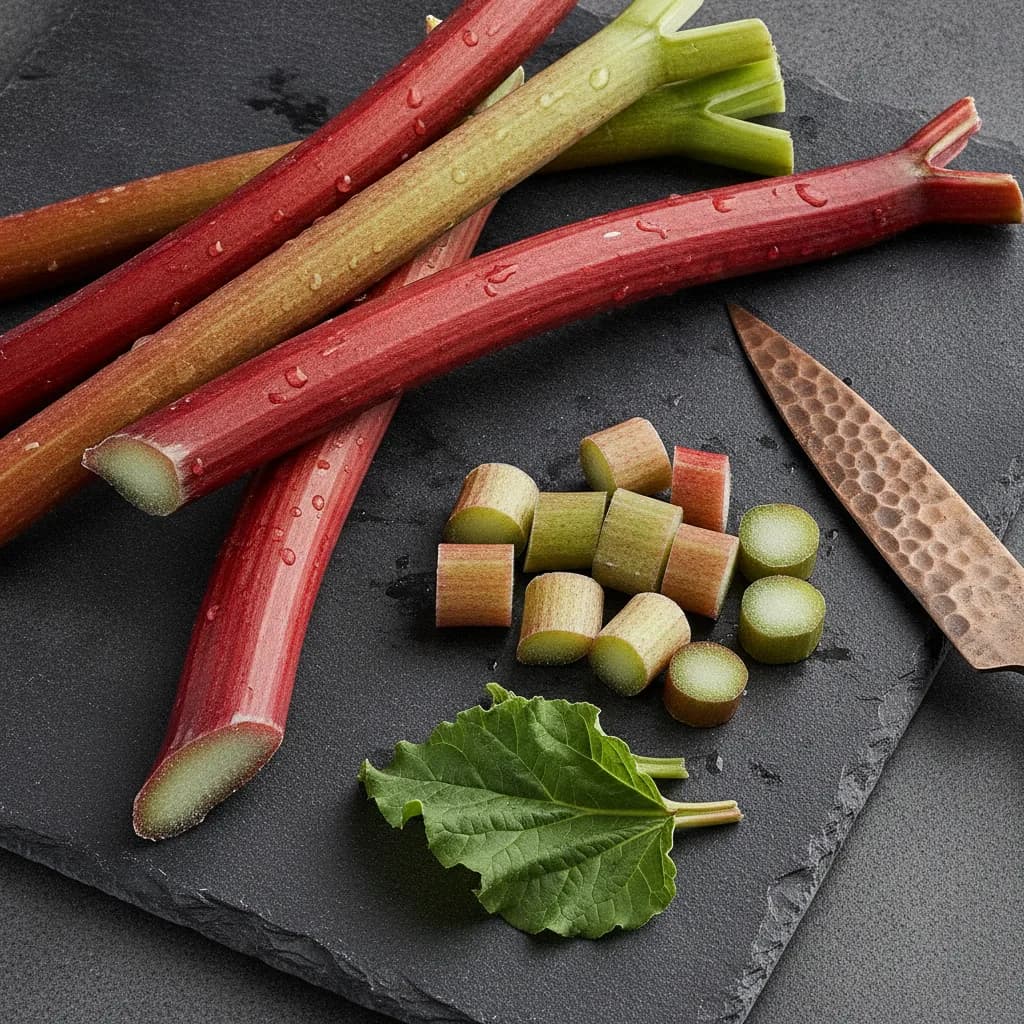
Remove and discard all leaves before cooking—they contain oxalic acid and are unsafe to eat.
Pair rhubarb with sugar, honey, or other fruits (strawberries, apple) to balance its tartness.
Younger, thinner stalks (spring harvest) are more tender and less fibrous than thick, mature ones.
No need to peel unless the outer layer looks very stringy; a quick rinse is usually enough.
Cook rhubarb gently over low to medium heat to preserve its bright color and avoid mushiness.
Common Mistakes
Cooking the leaves—they are toxic and should be discarded entirely.
Over-cooking, which turns rhubarb into mush; it breaks down quickly, so watch the pot.
Adding sugar too early in raw preparations; it can draw out water and make the rhubarb soggy before cooking.
Using only very thick, mature stalks without tasting first; they can be stringy and require longer cooking or peeling.
Aliases
- Rhubarbsplural
/rhubarbs