
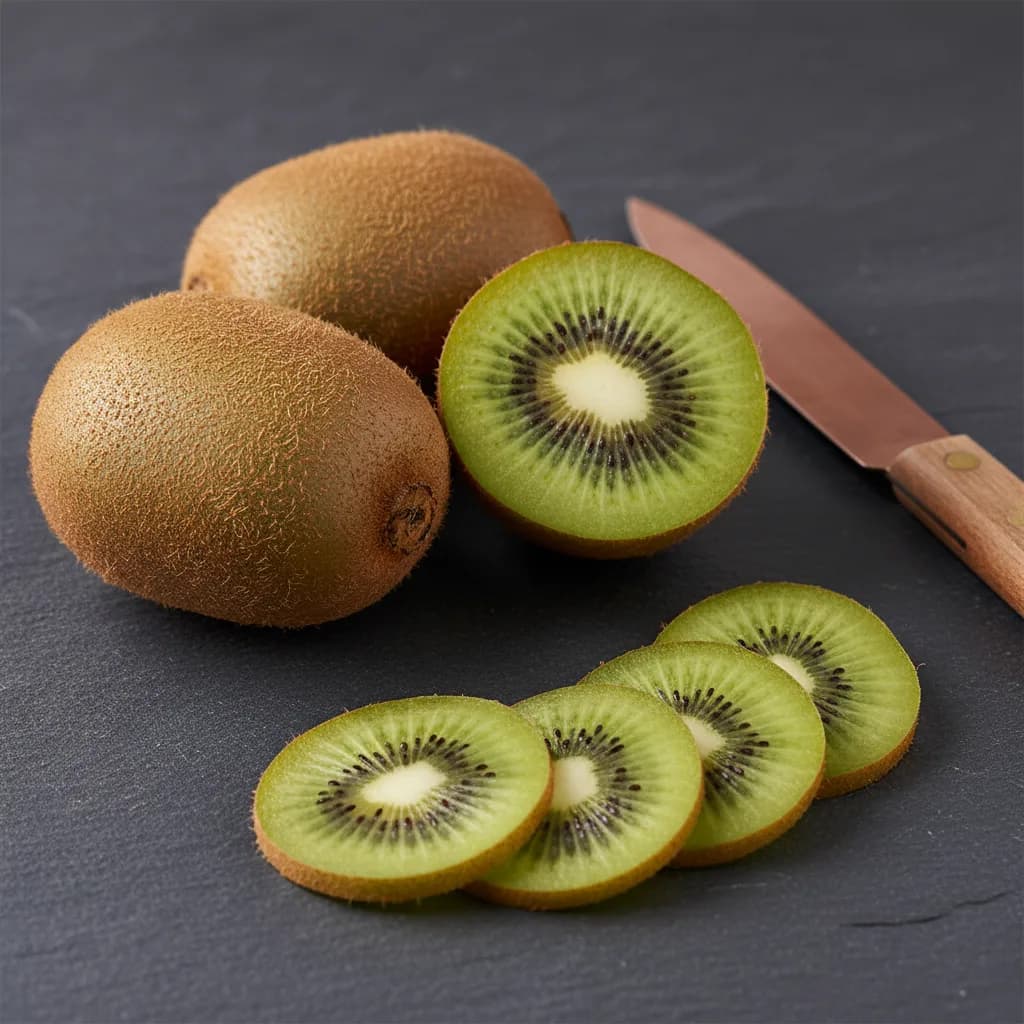
Types of Kiwifruit
Get some
On the shelf at your store. Live pricing is coming soon.
Add to shopping listStorage
Once ripe, transfer to fridge to slow ripening
Can be frozen but texture becomes soft; best for smoothies or cooked applications
Keep at room temperature until ripe (yields slightly to gentle pressure)
Cooking Tips
Test ripeness by gently squeezing near the stem—ripe fruit yields slightly without mushing
If your kiwi is hard, place it in a paper bag at room temperature for 2–3 days to ripen faster
Scoop the flesh directly into your mouth with a spoon for the easiest eating method
The skin is edible and contains extra fiber; wash thoroughly first if you choose to eat it
Cut kiwis release enzymes that break down gelatin, so add them to fruit salads just before serving if using with whipped cream or gelatin desserts
Pairs With
Tropical fruits: pineapple, mango, coconut
Berries: strawberry, raspberry, blueberry
Honey, lime, and mint
Yogurt and granola
Vanilla, almond, and coconut flavors
Common Mistakes
Using unripe kiwis that taste bitter and astringent—wait until they yield slightly to pressure
Storing ripe kiwis at room temperature too long, causing them to become mushy and fermented
Mixing kiwi into gelatin or whipped cream dishes hours ahead; the enzyme actinidin breaks down proteins and can ruin texture
Aliases
- Kiwifruitsplural
/kiwifruits