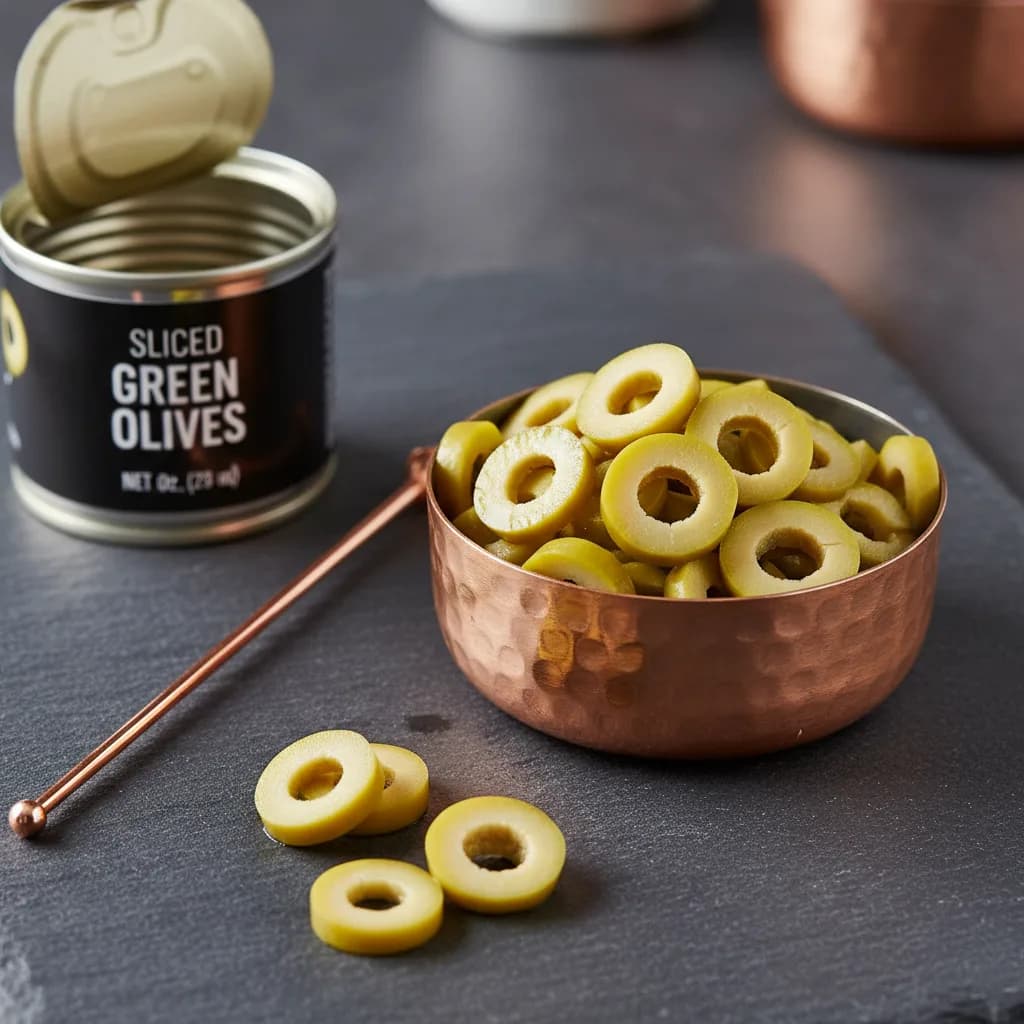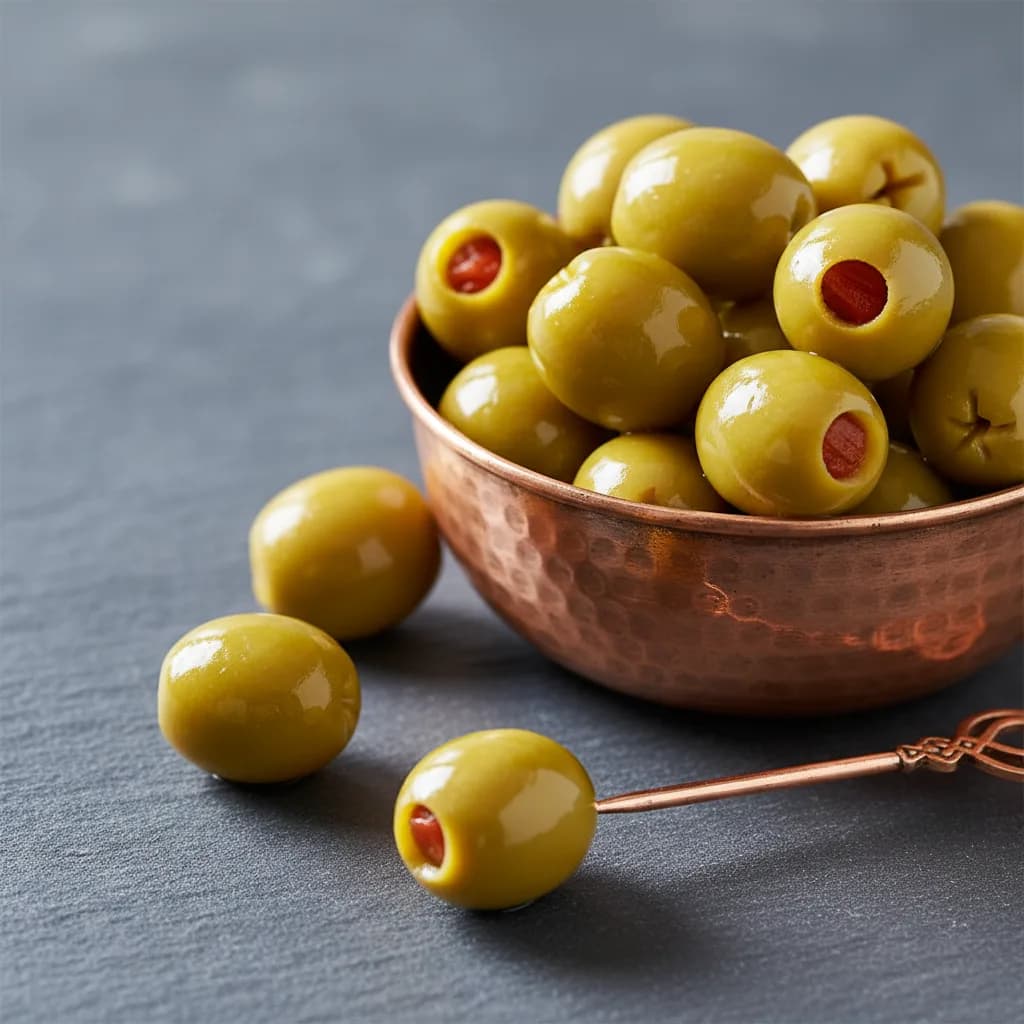
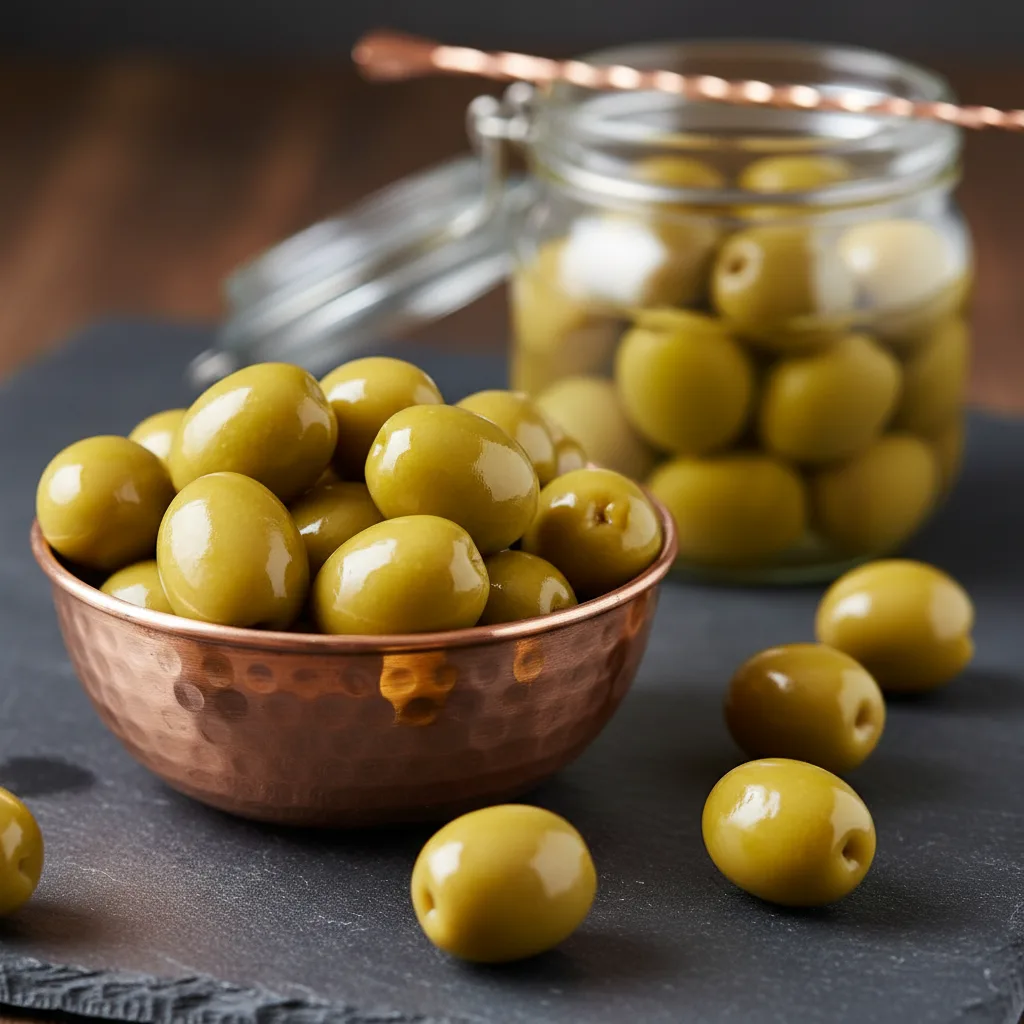
Types of Green Olives
Get some
On the shelf at your store. Live pricing is coming soon.
Add to shopping listStorage
Keep olives submerged in their brine or oil to prevent oxidation and spoilage. Opened jars stay fresh in the fridge as long as they remain covered in liquid. Unopened jarred olives are shelf-stable and best stored in a cool, dark place.
Several months (opened jar)
Cooking Tips
Rinse pitted or brined olives if you want to reduce saltiness before using them in recipes.
Green olives pair well with citrus, herbs (rosemary, thyme), garlic, and chili for quick flavor boosts.
Pit them yourself with a flat knife or olive pitter for better texture control in cooked dishes.
Add to pasta, salads, tagines, and cured meat boards without cooking—their flavor brightens when raw.
Pairs With
Citrus (lemon, orange)
Herbs (rosemary, oregano, thyme, parsley)
Garlic and red pepper flakes
Feta, mozzarella, and aged cheeses
Cured meats (prosciutto, anchovies)
Tomatoes and eggplant
Almonds and pine nuts
Common Mistakes
Using canned or jarred green olives directly from the tin without tasting first—they can be quite salty and may need rinsing.
Leaving olives exposed to air in an open jar; they'll oxidize and develop off-flavors.
Overcooking olives in stews or braises, which softens them and dulls their flavor.
Confusing green olives with black olives; green varieties are firmer and more acidic.
Aliases
- Green Olivesprimarycanonical
/green-olives-2 - Green Olivemerged
/green-olive