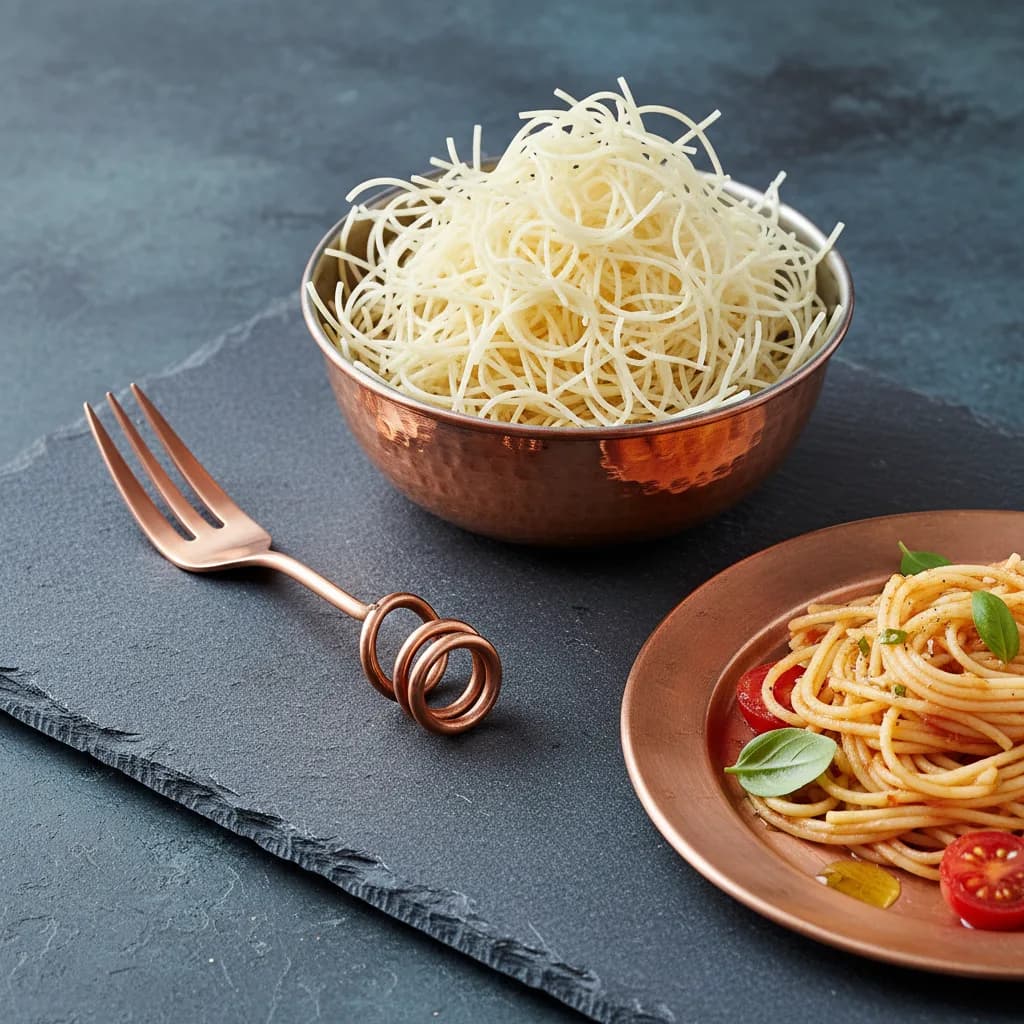
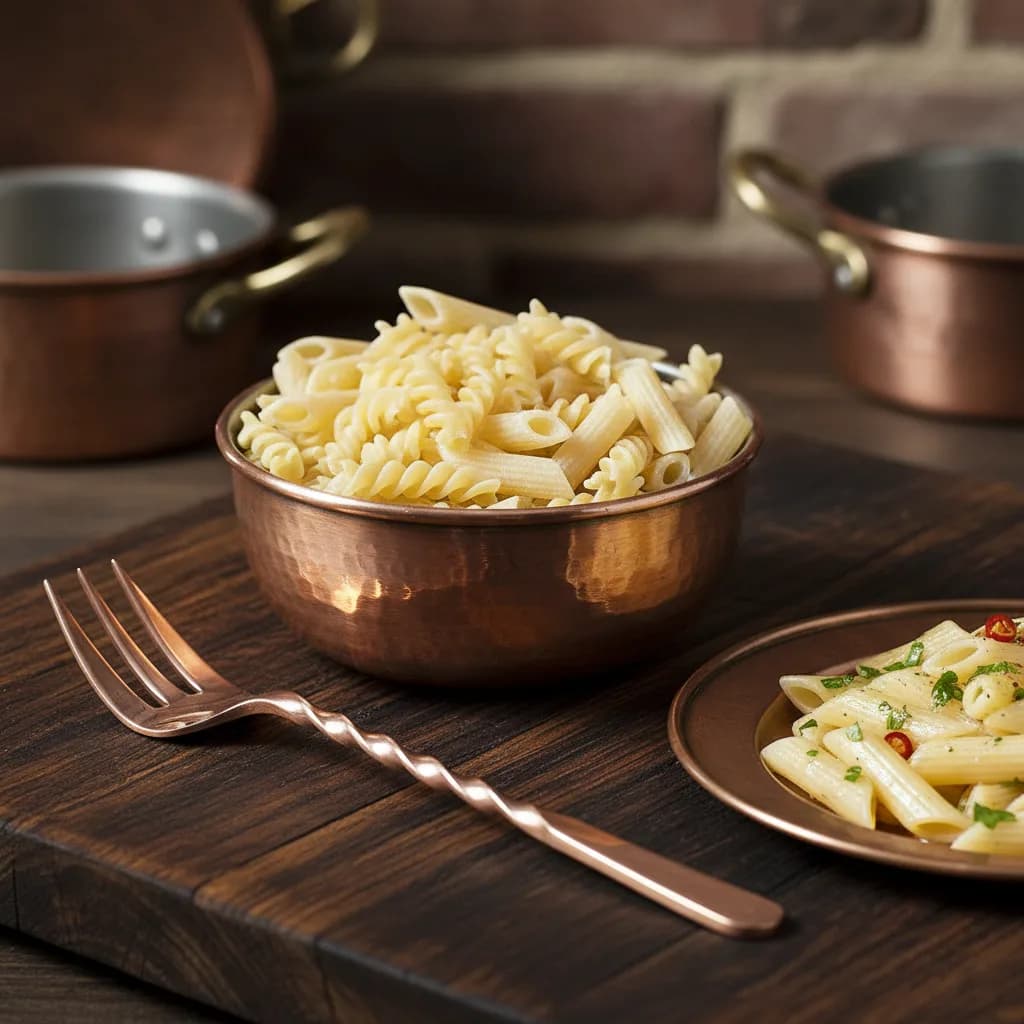
Types of Dry Pasta
Get some
On the shelf at your store. Live pricing is coming soon.
Add to shopping listStorage
Store in an airtight container in a cool, dry place. While technically edible indefinitely if stored properly, quality may degrade over time.
Nutrition
Cooking Tips
Always cook pasta in plenty of boiling, salted water. Use at least 4-6 quarts of water per pound of pasta.
Stir pasta occasionally during the first minute of cooking to prevent sticking.
Cook pasta until 'al dente' – tender but still firm to the bite. Overcooked pasta becomes mushy.
Reserve some of the starchy pasta water before draining. It's great for thinning sauces and helping them cling to the pasta.
Pairs With
Tomato-based sauces (marinara, bolognese)
Cream sauces (alfredo, carbonara)
Pesto
Olive oil and garlic
Vegetables (broccoli, spinach, mushrooms)
Proteins (meatballs, chicken, shrimp, beans)
Common Mistakes
Adding oil to the cooking water. This is generally unnecessary and can prevent sauce from adhering to the pasta.
Rinsing cooked pasta. This washes away the starch that helps sauce stick.
Overcrowding the pot. This lowers the water temperature and causes pasta to clump together.
Aliases
- Dry Pastaprimarycanonical
/dry-pasta-2 - Dry Pastasplural
/dry-pastas