
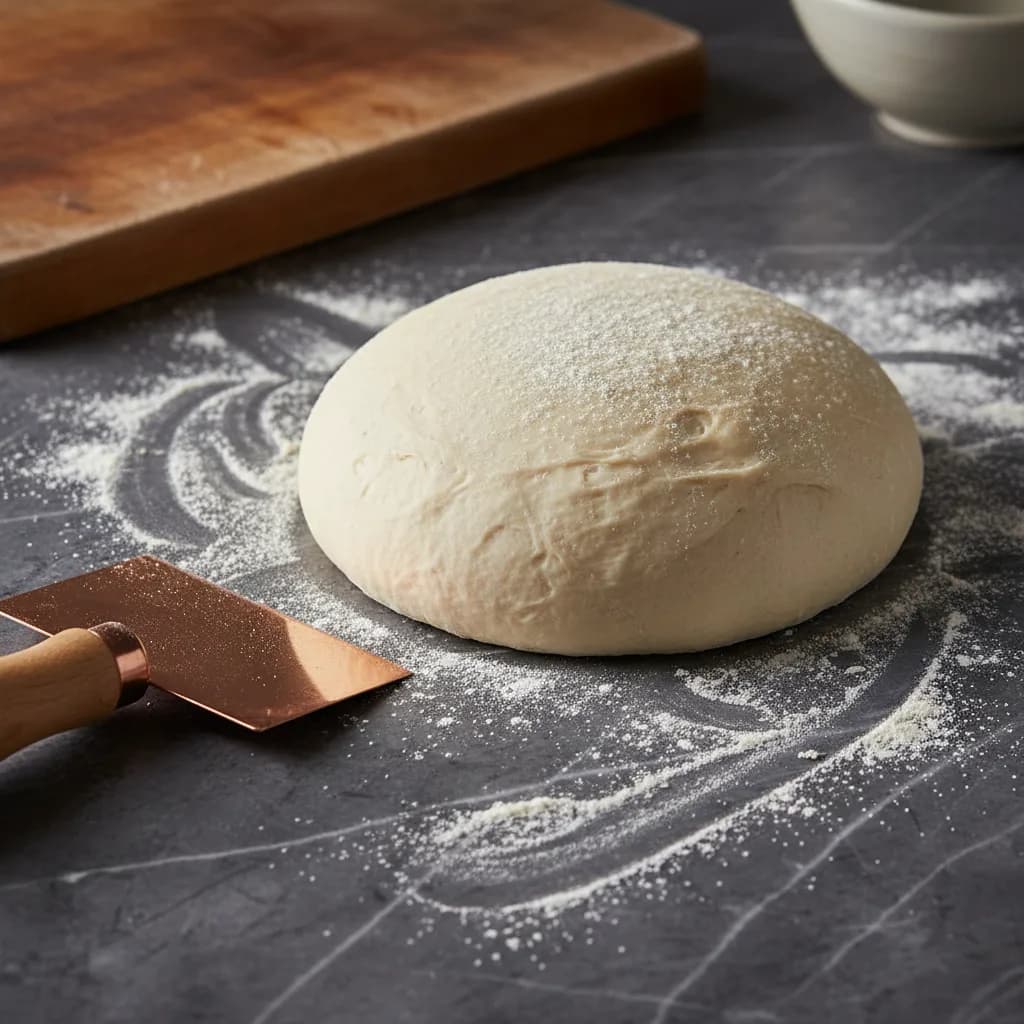
Types of Bread Dough
Get some
On the shelf at your store. Live pricing is coming soon.
Add to shopping listStorage
Active dough ferments at room temperature and should be baked within hours or moved to the fridge to slow fermentation. Refrigerated dough lasts 3–5 days and develops deeper flavor. Freeze shaped dough or bulk dough in an airtight container; thaw in the fridge before baking.
Cooking Tips
Watch for visual cues (dough has roughly doubled) rather than relying solely on time; fermentation speed varies with room temperature.
A cold ferment (overnight in the fridge) improves flavor and makes dough easier to handle.
Keep dough covered to prevent a dry crust from forming during rise.
If using commercial yeast, ensure it's fresh; old yeast will result in slow or failed fermentation.
Gentle handling after shaping helps preserve gas bubbles and achieves a better crumb.
Common Mistakes
Over-proofing: dough rises too much and collapses during baking, resulting in dense bread.
Under-proofing: dough hasn't fermented enough, leading to a tight crumb and pale crust.
Incorrect water temperature: too hot kills yeast; too cold slows fermentation unnecessarily.
Forgetting to salt: salt controls fermentation rate and strengthens gluten structure.
Skipping degassing: rough handling before shaping can knock out gas and trap moisture unevenly.
Aliases
- Bread Doughsplural
/bread-doughs