
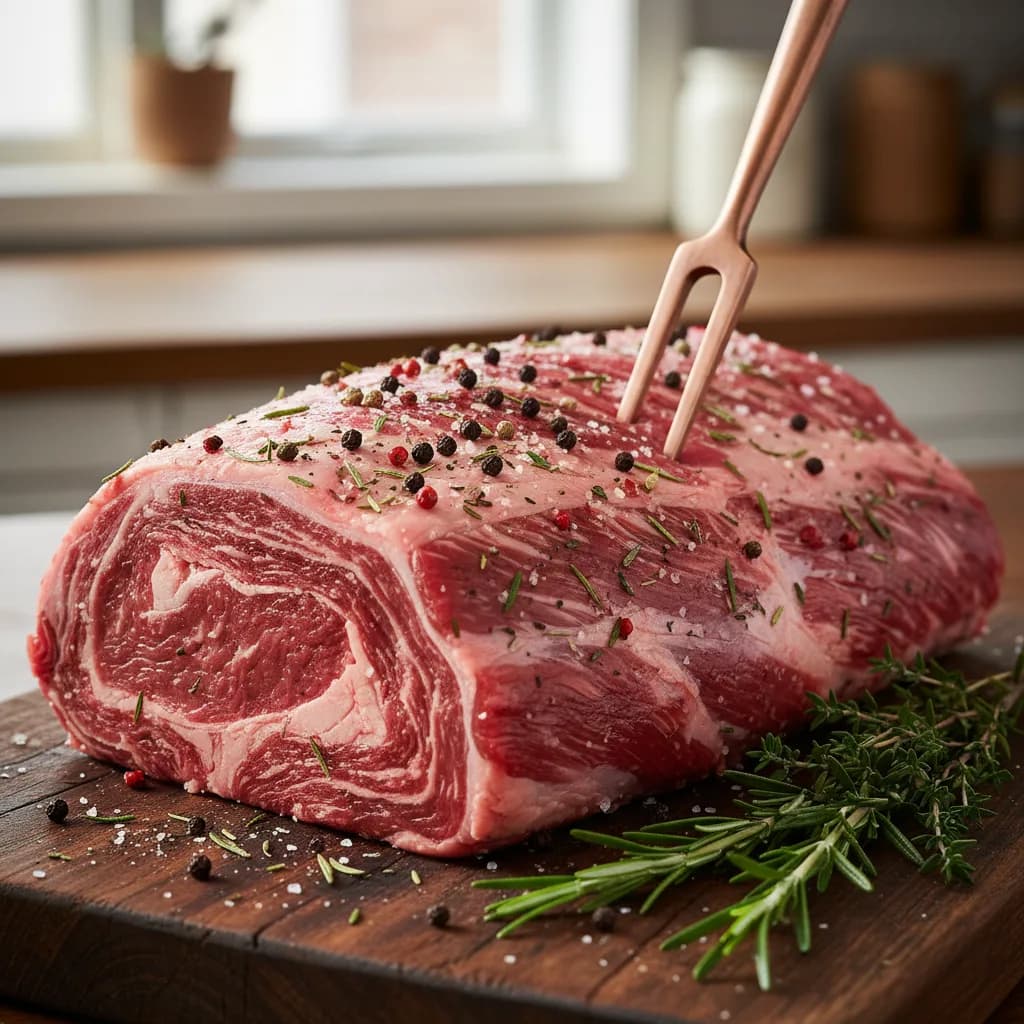
Types of Beef Chuck Roast
Get some
On the shelf at your store. Live pricing is coming soon.
Add to shopping listStorage
Store in the coldest part of your fridge. Wrap tightly to prevent drying and cross-contamination. Thaw frozen roasts in the fridge (allow ~5 hours per pound) before cooking, or cook from frozen using longer cooking times.
Cooking Tips
Trim excess surface fat before cooking, but leave some marbling for flavor.
Pat the roast dry and brown it hard on all sides over high heat before braising to develop a flavorful crust.
Low and slow is key: braise at 300–325°F for 3–4 hours (depending on size) until fork-tender.
The internal temperature should reach 190–205°F for maximum tenderness; 160°F is safe to eat but may be tough.
Let the roast rest for 10–15 minutes after cooking before slicing or shredding.
Pairs With
Root vegetables (potatoes, carrots, parsnips, celery)
Aromatic aromatics (onions, garlic, thyme, bay leaf, rosemary)
Braising liquids (beef broth, red wine, tomato-based sauces)
Spice profiles: chili powder, cumin, paprika (for American/Tex-Mex styles); ginger, soy, star anise (for Asian-inspired braises)
Common Mistakes
Cooking at too high a temperature, which dries out the meat instead of tenderizing it.
Not browning the meat first, which skips the flavorful Maillard reaction.
Cutting into the roast too early—it needs to rest to redistribute juices.
Using a roast that's too small; chuck roasts under 2–3 pounds can dry out easily.
Aliases
- Beef Chuck Roastsplural
/beef-chuck-roasts