
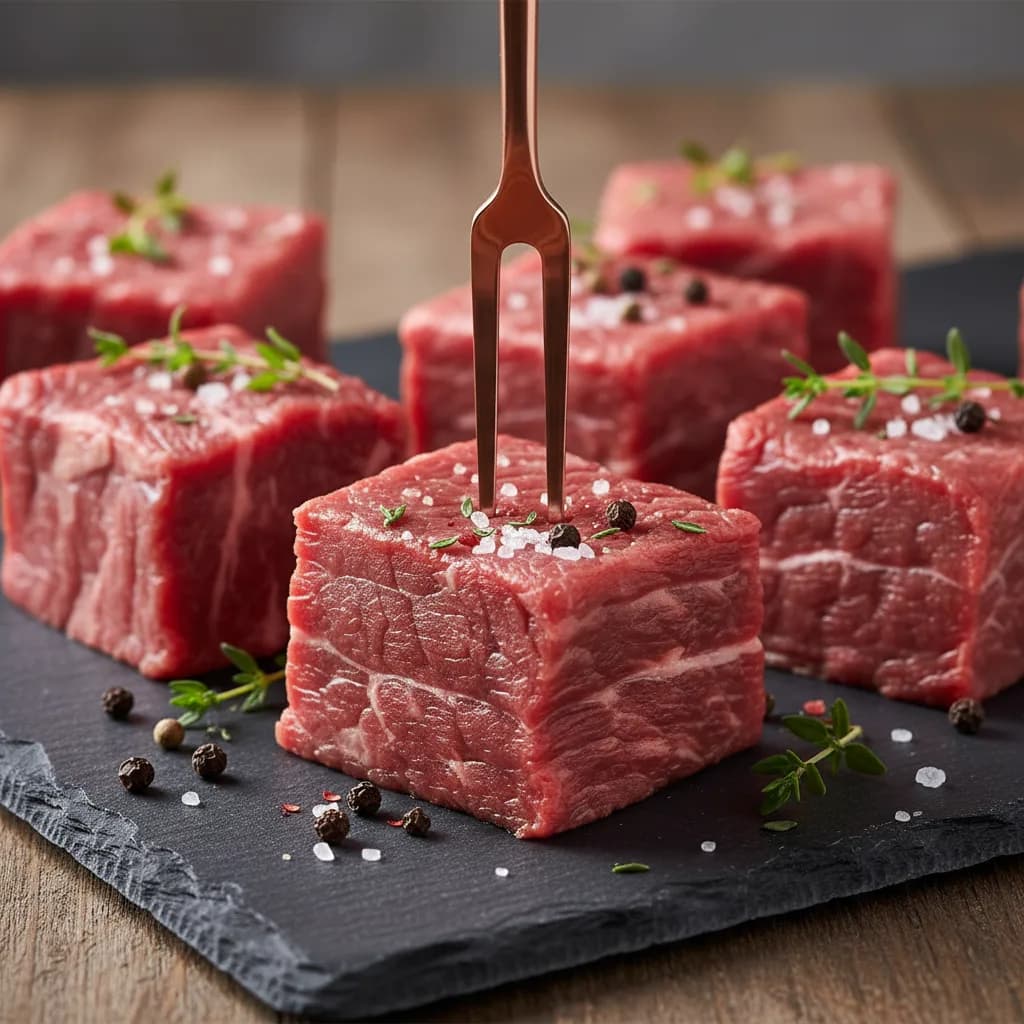
Types of Beef Chuck
Get some
On the shelf at your store. Live pricing is coming soon.
Add to shopping listStorage
Keep in coldest part of fridge. Wrap tightly or store in airtight container to prevent oxidation (browning).
Nutrition
Values approximate for raw, untrimmed chuck. Varies by specific subcut and fat content.
Cooking Tips
Pat dry before browning for better crust and deeper flavor development.
Braise or stew low and slow (275–300°F for 3–4 hours) to render fat and dissolve collagen.
Don't rush; the longer cook time transforms toughness into tenderness.
Cut into uniform chunks so pieces cook at the same rate.
Save the brasing liquid—it becomes a rich, flavorful sauce.
Pairs With
Root vegetables (carrots, potatoes, parsnips)
Aromatics (onions, garlic, celery)
Wine (red wine adds depth to braises)
Fresh herbs (thyme, bay leaf, rosemary)
Tomato products (tomato paste or whole tomatoes)
Common Mistakes
Cooking at high heat or too quickly; this dries it out instead of tenderizing it.
Not browning the meat first; this step builds flavor through the Maillard reaction.
Skipping the resting period after cooking; let it rest 10 minutes before serving.
Using too little liquid when braising; the meat needs to stay moist throughout cooking.
Aliases
- Beef Chuckprimarycanonical
/beef-chuck-2 - Beef Chucksplural
/beef-chucks