
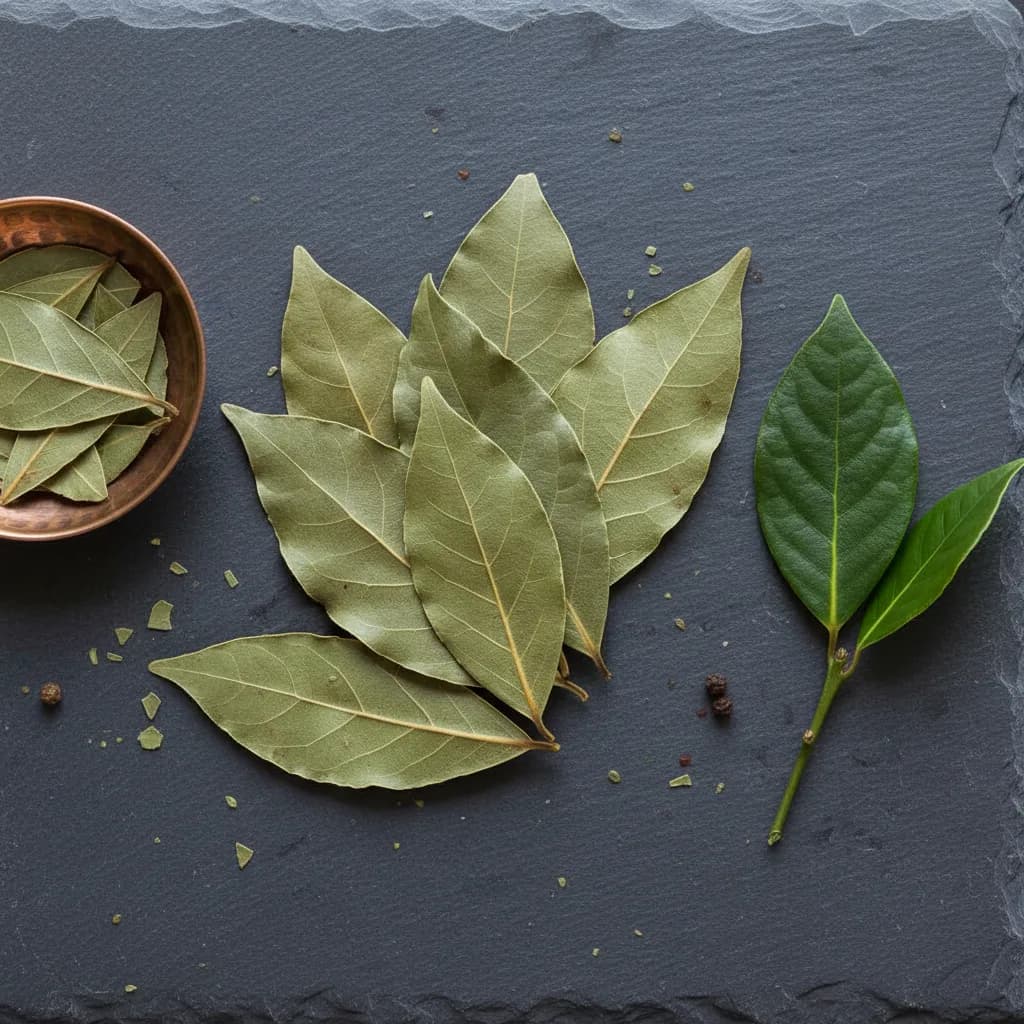
Bay Leaf
A foundational herb for stocks and slow-cooked dishes
Types of Bay Leaf
Get some
On the shelf at your store. Live pricing is coming soon.
Add to shopping listStorage
Store dried bay leaves in an airtight container in a cool, dark place. They retain flavor for 1-2 years but gradually lose potency. Fresh bay leaves can be refrigerated for up to a week or frozen for several months.
Cooking Tips
Add bay leaves early in cooking to allow their flavor to fully develop and infuse the dish
Use 1-2 leaves for most recipes; their flavor is subtle but can become bitter if too many are used
Always remove bay leaves before serving as they remain tough and can be a choking hazard
Crumble a leaf between your fingers before adding to release more essential oils
Turkish bay leaves tend to be milder than California bay leaves, which have a stronger, more eucalyptus-like flavor
Pairs With
Stocks and broths
Tomato-based sauces and soups
Beans and lentils
Pot roasts and braised meats
Rice pilafs and grain dishes
Pickling brines
Cream sauces and béchamel
Common Mistakes
Leaving bay leaves in the finished dish when serving—they don't soften and aren't meant to be eaten
Using old, faded bay leaves that have lost their aroma and flavor
Adding bay leaves at the end of cooking when they need time to infuse their flavor
Expecting a strong, immediately noticeable flavor—bay leaves work subtly in the background
Aliases
- Bay Leavesalternate
/bay-leaves - Dried Bay Leafalternate
/dried-bay-leaf - Dried Bay Leavesalternate
/dried-bay-leaves